AFR Banque Palatine 2025
-
-
Statement by the person responsible
I hereby certify that the information contained in this annual financial report is, to the best of my knowledge, true and accurate and contains no omission liable to impair its significance.
I declare that, to the best of my knowledge, the annual financial statements and consolidated financial statements were prepared in accordance with the body of applicable accounting standards and that they provide a faithful presentation of the assets, financial position and income of the company and all the companies included in the consolidation, and that the management report appearing on page 4 presents an accurate picture of the development and income of the company and the financial position of the company and all the companies included in the consolidation, as well as a description of the main risks and uncertainties to which they are exposed, and that it was prepared in accordance with applicable sustainability reporting standards.
-
Board of Directors’ management report
-
1Board of Directors’ management report
Economic environment
2025 was characterised by moderate global economic growth, reflecting an international context still marked by trade tensions and political uncertainty. According to the International Monetary Fund’s January 2026 World Economic Outlook, global gross domestic product growth is expected to be around 3.3% in 2025, stable compared with 2024 but higher than previously forecast thanks to the resilience of some major economies. This momentum is accompanied by significant regional disparities, while risks related to protectionism and persistent imbalances weigh on the outlook.
In 2025, the US economy is expected to grow moderately but at a much slower pace compared to previous years, with a GDP growth projection of around 2% (2.1% according to the World Bank report published in January 2026). The slowdown is linked to political uncertainty, trade tensions and weaker domestic demand. This expansion, well below the historical trend, reflects a context in which investment and consumption are gradually decreasing.
On the labour market, the unemployment rate is forecast to be around 4.4%, up slightly from a year earlier, a sign of a gradual tightening of the job market.
At the same time, inflation remains a significant challenge, with persistent pressures fuelled by tariff hikes and import costs, which could keep price developments well above the 2% target if these effects are increasingly transferred to the economy. The consumer price index therefore stood at 2.7% in December across the Atlantic.
Activity indicators published throughout the year show contrasting trends: while the ISM (Institute for Supply Management) services index remained above the expansion threshold overall (below the 50-point level), signalling continued growth in the services sector, that of the manufacturing sector was often below 50, indicating a contraction or stagnation in the US industrial sector.
For their part, confidence indicators showed a downward trend reflecting continued caution among business leaders and increased consumer concern about the economic outlook and price developments. These combined signals of activity and confidence illustrate the structural challenges facing the US economy, with companies hesitant to invest more and households increasingly sceptical about the future evolution of the labour market and purchasing power.
Within the Eurozone, growth continued at a moderate pace, with Gross Domestic Product (GDP) estimated to expand by nearly 1.3% according to Eurostat data, reflecting a slow but resilient recovery driven by domestic demand, while exports remain constrained by an uncertain global context. Spain’s economic momentum is noteworthy, as the country was driving European growth with GDP up 2.6% this year.
The unemployment rate remained at a relatively low level of 6.2% in December, showing a gradual improvement in the labour market despite national disparities.
Inflation has continued to decline, approaching the European Central Bank’s target of around 2%, although pressures on service prices remain persistent. Inflation in this area stood at 3.4% in December, compared with 1.9% for the overall index.
Emerging and developing economies continue to outperform advanced economies, despite a marked global context of persistent trade tensions. India remains the main driver, with GDP growth estimated at 7.2% according to the World Bank, supported by strong domestic demand, controlled inflation and significant structural resilience. China, however, is growing at a more moderate level close to 4.9%, reflecting the challenges of its structural transition from an export-oriented and industrial economy to a service- and consumption-oriented economy, as well as an ageing workforce that is weighing on growth potential. The country also has to deal with high corporate debt and tensions in the real estate sector, while also facing trade and technology tensions with the United States and the European Union, factors that are holding back some foreign investment and exports.
Against this backdrop, the world’s main stock markets experienced an eventful but generally positive year in 2025, marked by all-time highs and periods of extreme volatility.
The CAC 40 and EuroStoxx 50 have often reached or come close to record levels, driven by solid results from European companies as well as investor appetite despite macroeconomic uncertainties. The flagship index of the Paris stock market gained just over 10%, and the main European equity index rose 18.3% to 5,791 points.
In the United States, the major indices also ended the year with strong growth, with double-digit gains for the S&P 500, the Dow Jones and the Nasdaq, boosted in particular by enthusiasm around artificial intelligence (AI) and hopes of rate cuts by the US Federal Reserve (Fed).
On the commodities market, the year was marked by a notable divergence – precious metals such as gold and silver exploded to record levels driven by safe-haven demand and institutional buying, while oil suffered from a supply surplus and weaker demand, leading to significant price drops for crude. Gold has had a record year, with the price of an ounce rising to more than $4,300 at the end of the year, up nearly 65%. As for a barrel of oil, prices were down nearly 20% this year, to around $60.
Finally, cryptocurrencies experienced high volatility, with a significant bull phase pushing the “queen” of cryptocurrencies, Bitcoin, to an all-time high of around $125,000 in October, before being adjusted at the end of the year to finish at around $88,000.
Interest rate trends
The European Central Bank continued to normalise its monetary policy, with inflation expected to stabilise around the 2% target in the medium term. After four 25-basis-point cuts in the first half of the year, the ECB stabilised its key interest rates in the second half of the year while reaffirming an economic data-dependent approach. Therefore, the deposit rate, the refinancing rate and the marginal lending rate are set at 2.00%, 2.15% and 2.40% respectively. At the same time, the asset purchase programme (APP) and the pandemic emergency purchase programme (PEPP) continued to decline in a measured manner, as the ECB was no longer reinvesting the principal payments of maturing securities.
In 2025, the Fed adjusted its monetary policy gradually to keep pace with inflation and the labour market. After maintaining the target range for the federal funds rate in the range of 4.25%–4.50% for much of the year, the Federal Open Market Committee (FOMC) opted for a gradual reduction in rates at the end of the year, lowering the range to 3.50%–3.75% to support activity in the face of a moderate economic slowdown and inflation still above the 2% target, but on a downward track. The Fed continued to moderate the pace of balance sheet reduction, while remaining attentive to risks to jobs and prices, reflecting a cautious approach aimed at balancing its dual mandate. Internal monetary policy developments have also been marked by dissent over the scale and timing of adjustments, reflecting debates about the need for more severe tightening or more significant easing depending on incoming economic data.
Global interest rates continued to reflect both monetary policy developments and sovereign market dynamics.
In the Eurozone, the €STR short-term interbank rate stood at 1.92% at the end of the year, down by almost 100 basis points compared to the start of the year, reflecting the impact of the ECB’s decisions. The 3-month Euribor was around 2%.
Longer-term interest rates showed a different trend, as measured by swap rates, which at 2 years rose by just over 5 basis points to 2.2% and at 10 years by just over 50 basis points to 2.9%.
Yields on 10-year Eurozone sovereign bonds also rose, particularly given the growing financing needs for some countries. In France, bonds were also sensitive to political and budgetary uncertainty. The OAT ended the year at 3.6%.
In the United States, interest rate momentum was generally downward, both on monetary rates and on the 10-year US Treasury financing rate. Despite pressure on the dollar at the end of the year, the Secured Overnight Funding Rate (SOFR) fell by just over 60 bps to 3.9%. As in the Eurozone, the US swap yield curve steepened by around 50 basis points due to the more marked decline in the 2-year rate than that observed in the 10-year rate. Finally, on the bond market, the yield on US 10-year debt fell to 4.2% at the end of the year.
Outlook for 2026
Current global growth projections for 2026 show a broadly stable profile. However, this scenario remains surrounded by many uncertainties: the evolution of trade tensions (lull or resurgence), impact on the increasing integration and growing use of artificial intelligence, as well as geopolitical risks.
On this last point, the joint military operation carried out by the US and Israeli armies in Iran since the end of February could have significant repercussions, depending on its duration and a possible desire by the Iranian leaders to regionalise the conflict.
-
2Palatine sustainability report
Part 1 - General Information
1.1Basis for preparation
1.1.1BP 1 - General basis for the preparation of sustainability statements
Palatine prepared its sustainability report in accordance with the sustainability reporting standards adopted under Article 29b of Directive 2013/34 of the European Parliament and of the Council of December 14, 2022 (European Sustainability Reporting Standards or ESRS). These standards provide a comprehensive framework for the disclosure of non-financial information on environmental, social and governance issues.
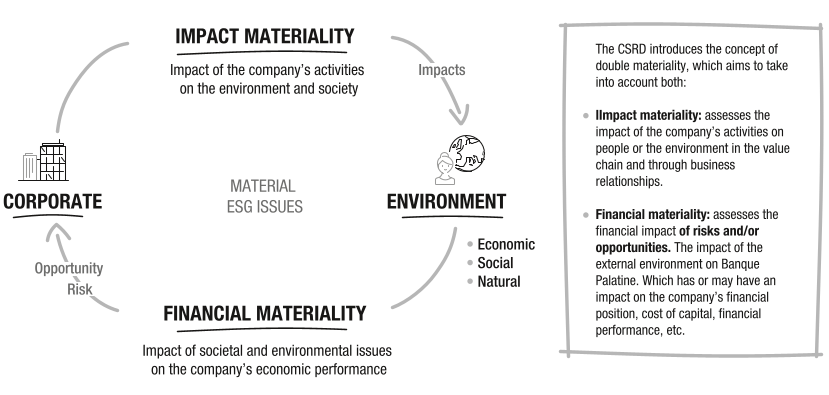
The bank's sustainability report is based on a double materiality analysis, which takes into account both Banque Palatine's impact on the environment and society, and the impact of environmental and social issues on the company's performance. This approach ensures that the sustainability report is relevant to all stakeholders, including employees, investors, clients and the communities in which the Bank operates. It results in a list of impacts caused by the Bank's activity, and of risks and opportunities (IRO) related to environmental and societal changes.
To prepare this report, Palatine has collected data on a consolidated basis and across its value chain. This sustainability report is audited as required by the regulations with a limited level of assurance.
Scope of the sustainability report
The scope of consolidation used for the sustainability report is the same as for the financial statements.
The following subsidiaries are included in Palatine's consolidation and are exempt from the obligation to provide individual and consolidated sustainability information: Palatine Asset Management and Ariès.
Any exclusions from the reporting scope by family of indicators are mentioned in the description of each indicator or in footnotes where applicable.
Option to omit specific disclosures
Palatine has not made use of the option that allows it to omit certain disclosures relating to intellectual property, know-how or the results of innovations. This option is provided for in Section 7.7 of ESRS 1: Classified and sensitive information, and information on intellectual property, know-how or results of innovation.
Nor has Palatine made use of the exemption from reporting disclosures on imminent developments or deals under negotiation, in accordance with Articles 19a(3) and 29a(3) of Directive 2013/34/EU.
1.1.2BP 2 - Disclosures in relation to specific circumstances
1.1.2.1Time horizons
In most cases, the material impacts, risks and opportunities have been assessed in the short, medium and long term. To obtain this forward-looking information about Palatine in the sustainability statements, the general principles as defined in Section 6.4 of ESRS 1 section were used:
- •1 year as short term (annual financial statement presentation period);
- •Between 1 year and 5 years as medium term;
- •More than 5 years as long term.
When the time horizons deviate from these general guidelines, this information is communicated at the same time as the relevant information concerning the specific material subject. During the preparation of this sustainability report, forward-looking estimates and assumptions were made. The results observed may differ from these estimates and assumptions.
1.1.2.2Value chain estimates
The indicators must cover the entire consolidated scope. However, for the calculation of greenhouse gas emissions under ESRS E1-6 (greenhouse gas emissions), the indicator is calculated over an extended scope. Scope 3, category 15 emissions relate to the value chain, in particular financed emissions.
In order to calculate Scope 3 category 15 emissions on the banking book, greenhouse gas data come from several sources:
- •purchase of supplier data (Carbone4, Trucost, CDP);
- •data collected from Palatine clients (EPD - Energy Performance Diagnostic); and
- •public databases (Centre Scientifique et Technique du Bâtiment and ADEME).
When data is not available, Groupe BPCE, which performed the calculation for all the entities within its scope concerned by the sustainability report, including Palatine, uses sector-specific intensity estimates: extrapolation or PCAF proxy.
1.1.2.3Sources of uncertainty concerning estimates and outcome
This report, known as the "Palatine sustainability report", was prepared in accordance with the legal and regulatory requirements resulting from the transposition of the European Directive on the disclosure of information on companies' sustainability (Corporate Sustainability Reporting Directive or “CSRD Directive”). This second year of application is characterised by uncertainties about the interpretation of the texts, which are generalist and cover all sectors of activity but do not specify a specific framework for banking and financial business models. There is also the absence of established practices or comparative information and certain data, in particular within the “value chain”.
With regard to what follows, Palatine has drawn on all the work done by Groupe BPCE in preparing its own sustainability report.
Groupe BPCE has endeavoured to apply the normative requirements set by the ESRS, as applicable at the date of the sustainability statement, based on the information available within the timeframe for its preparation, by doing its best to reflect its role as a universal bank-insurer, as well as its various business models.
For the double materiality analysis and, in particular, that relating to its value chain, Groupe BPCE encountered limitations relating to the maturity of its valuation methodologies and the availability of data. As presented in section 1.4.2 - List of material IRO, on the Environment (E) topic, Groupe BPCE considered that only the issue of mitigation and adaptation related to climate change is material within the meaning of the standard. The limitations relating to the market information and methodologies available at this stage did not make it possible to characterize the Nature ESRS’s materiality within the standard’s meaning, which led the Group to assess these environmental issues as non-material. This assessment was carried out based on the definitions of the standard, and the methodologies available to assess and carry out the rating exercises. This assessment can be explained, in particular, by the absence of a consensus on robust methodologies developed on the topics in question and of relevant and appropriate data which would make it possible to establish a link between the impact or risks for Groupe BPCE regarding these topics through its value chain. In view of Groupe BPCE’s continuous improvement approach to these environmental issues, the work and ongoing changes in international methodologies, the standards that are being put in place, the best market practices that are emerging and information and data from its customers, which should gradually become available, this double materiality analysis may change in the coming years. The dual materiality analysis, the results of which are presented in this report, aims to qualify the impacts, risks and opportunities as described in the CSRD standard: this analysis only meets the needs of sustainability reporting and not the analysis of factors risks presented in the chapter on risk management.
For the data points presented in this report, Groupe BPCE used methodological options that it deemed relevant and estimates for numerous data, particularly concerning the various activities in its value chain. The data, analyses, and studies carried out do not guarantee that expectations and targets will be achieved: they are based on objectives, commitments, estimates, assumptions, standards, and methodologies under development and currently available data, which continue to evolve and develop. Some of the information in this document was obtained from public sources, sources that seem reliable, or market references: Groupe BPCE has not verified it independently. In addition, Groupe BPCE notes that the information expected in terms of sustainability is based on so-called “agnostic” European standards (ESRS), which are generalist and do not reflect the specificities of the financial sector. As a result, certain data items deemed irrelevant or not applicable, given Groupe BPCE’s business models and value chain, have not been produced. The same applies to certain data points relating to the taxonomy regulation.
Regarding the climate change mitigation and adaptation transition plan, in its transition plan, Groupe BPCE distinguishes between actions relating to its own operations and the targets and actions that it has set itself in order to contribute to the decarbonisation of the economy by supporting its clients. The actions described present, in particular, the achievements and roadmap for the actions that seem to impact the downstream value chain. The Group’s transition plan describes past, current and future efforts to align its financing, investment and insurance portfolios with scientifically established trajectories aimed at achieving global carbon neutrality by supporting its customers with their environmental transition. This report does not quantify the effects of decarbonisation levers or future estimates of total financed emissions. Indeed, the actions undertaken by the Group cannot replace those of individual clients, companies or States that it supports with the transition, and the transition of the economy to a low-carbon economy depends on many parameters external to Groupe BPCE.
Regarding the assessment of greenhouse gas emissions, as a service company, the Group emits a limited level of CO2eq in terms of its own operations, including by integrating the upstream value chain (purchases, including those related to IT and technological investments, mobility including business trips, etc.) and its clients travelling to its branches or business centres. Regarding its assessment of greenhouse gas emissions, in addition to its own operational emissions, the Group takes into account an estimate of the emissions associated with certain activities in its upstream and downstream value chain, including in particular its investments. In this respect, a significant proportion of the emissions recorded come from so-called "financed" emissions, measured according to a standardised method applicable to category 15 of the GHG Protocol, based on the allocation to the institution of a share of the issues of financed or held counterparties. It is estimated that financed emissions can, on average, account for three times the same greenhouse gas emissions for portfolios exposed to companies in the same value chain. For this sustainability statement, the Group considered the mandatory categories of financial assets provided for in the Greenhouse Gas (GHG) protocol for calculating financed emissions. The scopes, methodologies used and the main assumptions and data sources are detailed in the paragraph relating to (E1-6) “Gross Scopes 1, 2, 3 and Total GHG emissions”.
With regard to Taxonomy, the assumptions used and limitations are detailed in chapter 2.1 Indicators of the European taxonomy on sustainable activities.
Groupe BPCE believes that the expectations reflected in these forward-looking statements are reasonable; however, they are subject to numerous risks and uncertainties, are difficult to predict, generally outside of the control of Groupe BPCE, sometimes unknown, and may lead to results or cause events to unfold significantly differently from those expressed, implied, or anticipated by the aforementioned information and forward-looking statements.
1.1.2.4Changes in the preparation or presentation of sustainability information
No material change in the definition or calculation of metrics, including those used to set targets and monitor progress towards their achievement.
1.1.2.5Reporting of errors in prior periods
1.1.2.6Publication of information from other legislation or widely accepted sustainability information frameworks
Palatine has defined sustainability risk as a risk factor in its risk management framework. The chapter on environmental, social and governance risks under Pillar 3 ESG describes how the Bank defines and manages these risks. This chapter also contains an overview of the impact of climate and environmental risks on other types of risks. Further details on the methodologies and management used for traditional types of risks, such as credit risk, market risk, operational risk and liquidity risk, are provided in chapter 4 - Risk Management.
In addition, the elements relating to the eligibility and alignment of the Bank's portfolios as defined in Regulation (EU) 2020/852 and supplemented by Delegated Regulations (EU) 2021/2178, 2021/2139 and 2023/2486 are included in chapter 2.1. Indicators of the European taxonomy on sustainable activities.
1.1.2.7Incorporation of information by reference
In order to avoid duplication, ESRS 1 allows the incorporation of parts prepared in other documents, such as the management report or the Universal Registration Document, by means of a simple mention, provided that this information has equivalent characteristics, particularly in terms of reliability. This generally concerns the parts relating to the description of the company’s activities and strategy, its governance, remuneration policies, risk factors and the duty of care. The ESRS consider that it is essential to ensure and explain consistency between the sustainability report and the financial statements, paying particular attention to significant amounts, assumptions and projections. Amounts considered material from the financial statements must be accompanied by a reference. While the presentation of a reconciliation in the form of a comparative table between the amounts of the sustainability report and those of the financial statements remains optional.
Requirement Name
Publication
Data point
Registration Document
Document Section
Reference
Disclosures in relation to specific circumstances
ESRS BP-2 Para. 15
Annual report
Chapter 4 – Risk Management Report
The role of the administrative and management bodies
ESRS 2 GOV-1 Para. 19 & 21
Annual report
Chapter 1.3 – Report on corporate governance
Risk management and internal controls over sustainability reporting
ESRS 2 GOV-5 Para. 36 (a)
Annual report
Chapter 4 – Risk Management Report
1.2Strategy
1.2.1SBM-1 - Strategy, business model and value chain
1.2.1.1Sustainability strategy
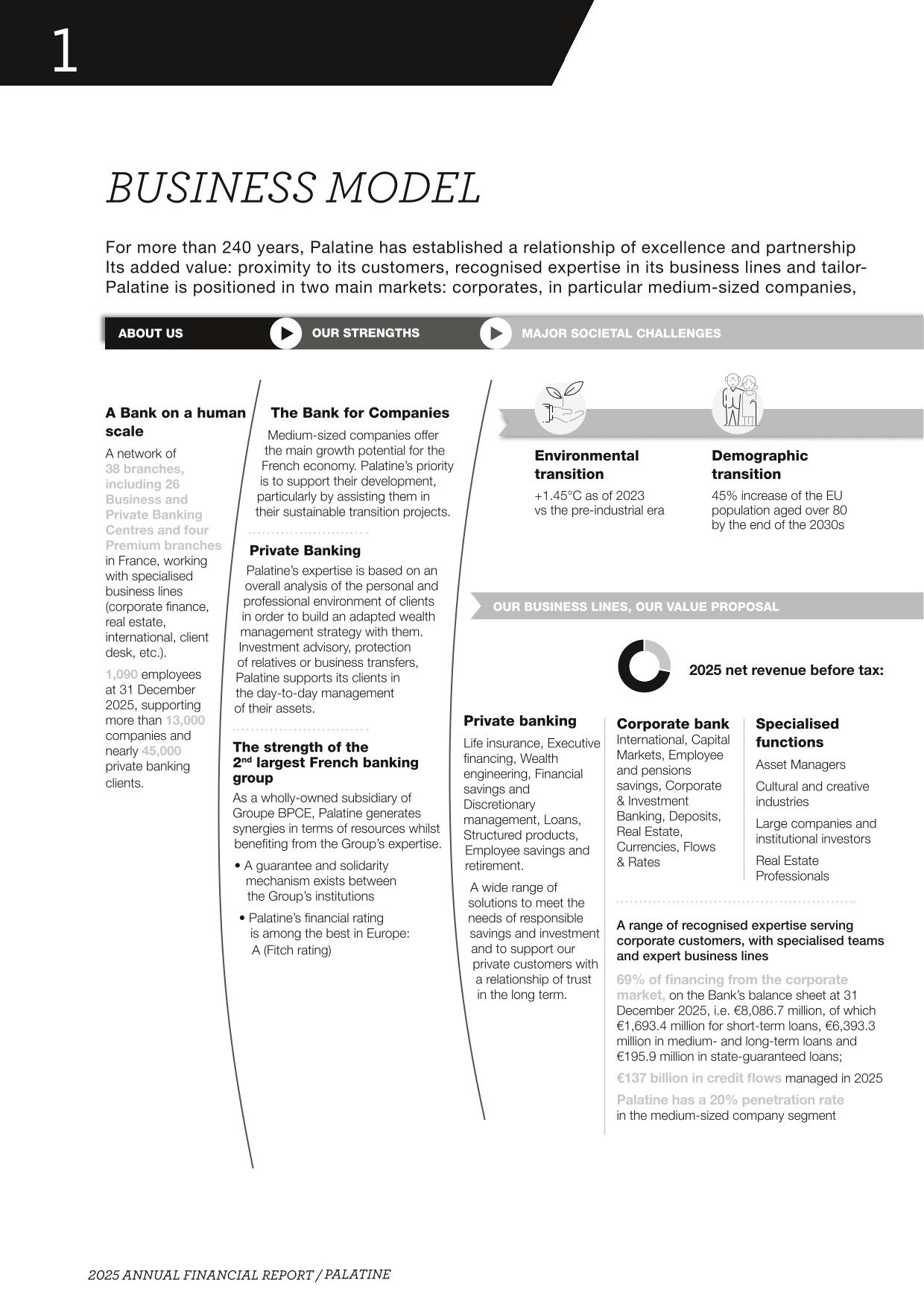
Palatine is part of Groupe BPCE, the second largest banking group in France. A little more than 1,000 employees serving 13,000 corporate clients and more than 45,000 private clients work closely with natural persons or legal entities, responding in a concrete way to the needs of the real economy.
In 2025, faced with environmental, demographic, technological and geopolitical challenges, Palatine was fully committed to financing French medium-sized companies and supporting all its clients in adapting to their new environment.
At the same time, Palatine has been attentive to the working conditions of its employees. Efforts focused on career support, mobility, skills development and recruitment.
On the environmental aspect, in addition to the continuation of awareness-raising workshops on climate issues for the Bank’s employees, the Sustainable Finance Programme has continued, with the aim of better addressing clients’ needs for support and transition-related services.
Faithful to its commitment to community involvement and its values, Palatine continued its societal actions, made donations and supported charitable projects (see section 1.2.3 Sponsorship policy – partnerships).
Characterised by gender-balanced governance, promoting gender equality is therefore a key focus of its strategy.
Palatine therefore intends to continue all its projects aimed at promoting greater integration of environmental and social issues into its activities and relations with its stakeholders between now and 2030. This will notably involve continuing to provide special support to its medium-sized corporate clients and senior executives committed to sustainable, low-carbon and carbon-neutral growth, and including three separate projects with clearly defined objectives in its new Palatine 2030 strategic plan.
Palatine 2030
In 2025, the roll-out of the Palatine 2030 strategic plan, defined in 2024, continued. It is based on a purpose co-built with the Bank’s employees, where Palatine demonstrates its desire to actively engage in order to contribute to the energy and environmental transition by reducing its carbon footprint and supporting its clients in improving their impact.
The purpose of the Bank is thus defined: “As a banking house since 1780, we have been shaping our know-how, our agility and a culture of excellence to be the trusted partner of our clients, both Corporate and Private Banking. We are convinced that French medium-sized companies and their senior executives are at the heart of the economic and socio-environmental challenges of today and tomorrow. As entrepreneurs at the service of entrepreneurs, we contribute to a more sustainable economy by investing in the success of their development, transformation and transmission projects”.
Clients are placed at the centre of Palatine’s strategy as a fundamental priority. Risk expertise is confirmed as a marker of its differentiation. Finally, people are at the heart of its focus, making it the bank where the future of work is being shaped and experienced every day.
Palatine's 2030 vision is broken down into 7 structuring focuses, which reflect the priorities of its development plan in terms of innovation, excellence and performance:
- •the bank of 1 in 4 medium-sized companies and 1 in 2 family-owned medium-sized companies,
- •the reference bank for supporting medium-sized companies in their transitions,
- •the benchmark for senior executives in terms of Private Banking,
- •the leading bank for asset managers (ADB),
- •a bank that innovates to strengthen its businesses in the areas of risk, data and new technologies,
- •a bank with the “Great place to work” label,
- •in the top 3 banks in the cultural and creative industry (cinema, streaming platforms, e-sports structures, content creators, live entertainment, etc.).
Among the major cross-functional projects launched in late 2024 to achieve the ambitious targets set for 2030, one was an overarching project aimed at taking the "Engagé RSE" label to the next level. The objectives were to: minimise the Bank's direct footprint, increase its positive impact on relevant environmental and societal issues, and strengthen its engagement with all its stakeholders. This was implemented by obtaining the "Engagé RSE" label at the "confirmed" level in December 2025. Another structuring project centred on sustainable finance, with objectives including training sales teams in sustainable finance, a programme that has already been completed for corporate account managers and will continue for private bankers in 2026, defining and implementing the Bank's green strategy, setting up a Palatine hub, leading a community of sustainable finance experts, and expanding its offering.
Environmental impact
Faced with the climate emergency, Groupe BPCE and Palatine's approach aims to rapidly implement and deploy measures to mitigate and adapt to the already tangible environmental and socio-economic impacts of climate change and the erosion of biodiversity. Making impact accessible to all means raising awareness and massively supporting all its customers in the environmental transition through expertise, consulting offers and global solutions.
By drawing on science-based scenarios, Groupe BPCE and Palatine are positioning themselves as facilitators of transition efforts, with a clear and ambitious objective: to align their financing and insurance portfolios with trajectories based on scientific scenarios compatible with the objectives of the Paris Agreement.
- •Impact solutions
- •for Private Banking customers: support energy renovation by offering financing solutions and by mobilising its role as an operator, trusted third party as well as its partnerships:
- −by offering a "Sustainable Advice and Solutions" tool in partnership with ADEME, enabling people to easily calculate their carbon footprint and receive advice and assistance for energy renovation work, carbon-free mobility or green savings,
- −by supporting energy renovation projects for condominiums at each stage: energy assessment, search for subsidies, completion of work guarantee, with pathways and financing adapted to each situation,
- −by increasing the number of financing for the energy renovation of buildings,
- −by offering sustainable solutions for investor clients with a range of responsible savings and investments: sustainable development passbook savings accounts, funds with a sustainable investment objective, themed-labelled funds, etc.
- •for corporate customers: supporting the transition of its medium-sized corporate customers’ business models. Palatine is committed to engaging in dedicated dialogue and providing sector-specific expertise to integrate ESG issues according to their size and economic sector, particularly in energy and transport infrastructure, etc.;
- •for Private Banking customers: support energy renovation by offering financing solutions and by mobilising its role as an operator, trusted third party as well as its partnerships:
- •a support for the evolution of the energy mix: faced with the climate emergency, the priority is to accelerate the transition to a sustainable energy system:
- •by playing a leading role in the financing of debt projects for the renewable energy sector,
- •by increasing its financing dedicated to the production and storage of green electricity,
- •by providing financial support and advice through specialist partners to assist the energy transition of medium-sized companies, particularly in the industrial sector,
- •by supporting the reindustrialisation of regions and energy sovereignty,
- •by leveraging dedicated teams of experts in both project financing and business transition support;
- •alignment of its financing, investment and insurance portfolios with trajectories compatible with the objectives of the Paris Agreement:
- •by developing systems to measure carbon emissions,
- •by developing its system for identifying and managing climate, physical and transition risks to which its clients and its own activities are exposed, in a spirit of continuous improvement,
- •by gradually withdrawing from activities with the highest emissions, in particular through adapted ESG policies.
Societal impact
Palatine is committed to supporting local and national initiatives and assists organisations in the fields of art and culture, gender equality, sport.
1.2.1.2Sustainability targets
Among the strategic priorities of its new VISION 2030 strategy, Groupe BPCE is renewing its commitment to environmental and societal transitions. It is committed to making the impact accessible to all and to strengthening its global "positive impact" through the strength of its local solutions.
Sustainable Finance indicators
Achieved 2025
2026 target
HQLA ESG (1)
25.5%
25%
Production of renewable energy
Green portion of Palatine financing production
29% of total corporate financing production in 2025
25% of total corporate financing production in 2026(2)
Production impact loans
ESG questionnaire (active companies turnover > €3 million)
86%
100%
- (1)HQLAs are assets that can be quickly converted into cash without significant loss of value. They are used by banks to meet liquidity requirements, such as those imposed by the short-term liquidity ratio (LCR) under Basel III. ESG HQLA are compliant with Environmental, Social and Governance (ESG) criteria.
- (2)Due to the changing geopolitical context and European regulations.
1.2.1.3Business model
Palatine, a hybrid business model within Groupe BPCE
1.2.1.4Description of major product groups, markets and/or client groups targeted
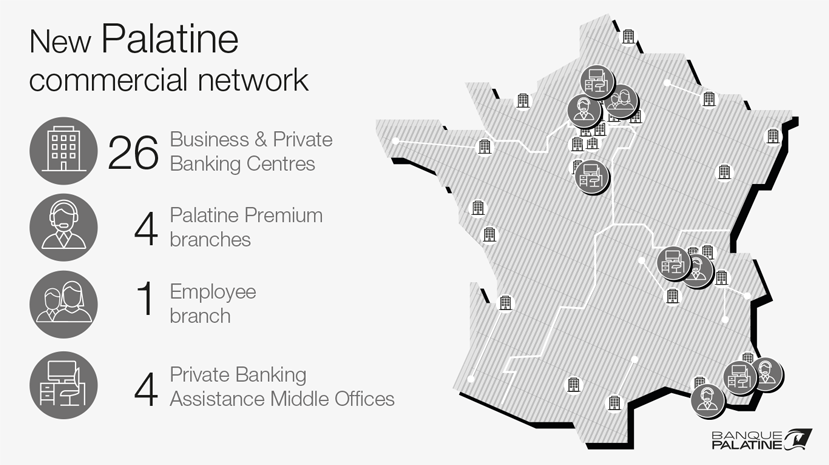
Palatine, a wholly-owned subsidiary of BPCE SA, serves approximately 58,000 clients in France: 13,000 corporate clients and 45,000 Private Banking clients. Mainly dedicated to mid-sized companies, senior executives and Private Banking, it has been supporting entrepreneurs both professionally and personally for more than 240 years. It provides them with a range of banking products (current accounts, real estate and personal loans, financial investments, financing solutions to meet environmental challenges) and insurance products. Its network consists of 38 branches, including 26 business and Private Banking centres and 4 premium branches.
Palatine offers value-added expertise dedicated to supporting its clients’ growth and performance: wealth, legal and tax engineering, investment advice, global approach to senior executives’ assets, corporate finance, specialised approach to real estate, trade finance, client desk, etc.
In the regulated real estate market, where the bank is the market leader, and in the audiovisual market, where it is a key player, it deploys a dedicated national organisation.
Its slogan “The art of being a banker” illustrates Palatine’s desire to develop a local relational model based on excellent support for its clients.
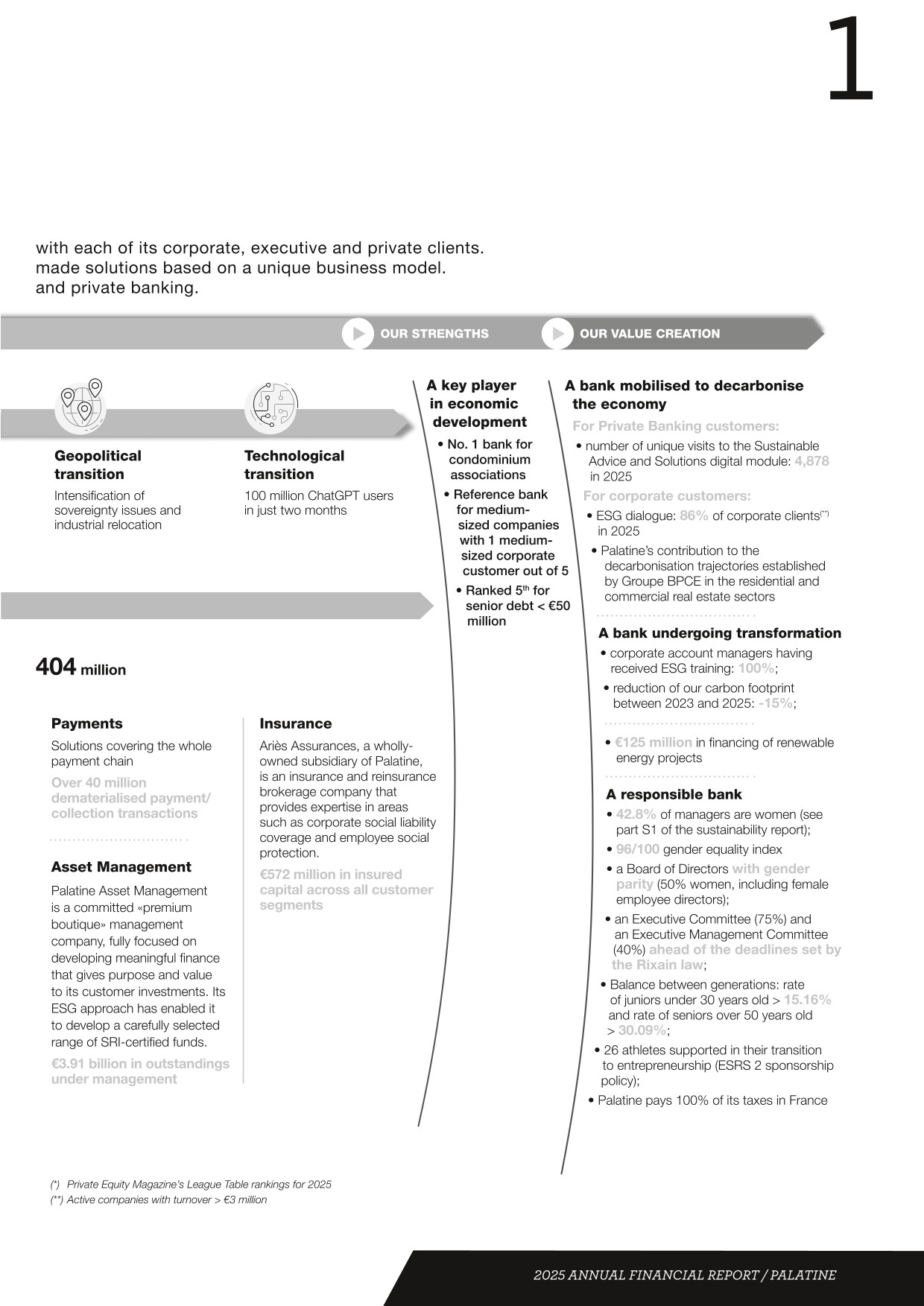
Palatine Asset Management, a wholly-owned subsidiary of Palatine, is a “premium boutique” asset management company focused on developing useful finance that gives meaning and value to its client's investments.
Its value proposition is focused on the search for sustainable investment solutions to meet different investor profiles from institutional to private customers.
Its team, comprising around thirty employees with complementary profiles, has solid expertise in fixed income management, equity management and diversified management. This expertise is reflected in its range of funds and its portfolio management offer.
1.2.1.5Description of products and services prohibited in certain markets
ESG policies govern the activities of Groupe BPCE in sectors considered sensitive from an environmental, social and governance (ESG) point of view, including those of Palatine.
In addition, Palatine has established strict rules regarding financing for real estate professionals: if the financing concerns an older residential property with an Energy Performance Certificate (EPC) rating of E, F or G, it can only be granted if renovation investments are planned. The same applies to commercial assets of less than 1,000 m² that do not meet the minimum criteria defined by the bank.
Palatine Asset Management activities
As part of its Responsible Investment approach, Palatine AM was quick to implement a policy to exclude the coal sector and monitor contentious issues in order to reduce its exposure to ESG risks, as well as its policy of excluding controversial weapons.
By excluding these issuers, Palatine AM wishes to focus its investment choices on the most responsible companies.
These exclusion lists have since been expanded to include the tobacco, oil and gas sectors, companies that violate the principles of the United Nations Global Compact, non-transparent issuers and, finally, the most carbon-intensive electricity producers.
In parallel with this exclusion policy, Palatine AM is also committed to engaging with companies to encourage them to improve their environmental, social and governance practices. The objective is to promote long-term sustainable performance.
The full policy is available at the following address: Palatine AM exclusion policy
1.2.1.6Labels and commitments
Public commitments that meet demanding international standards
Groupe BPCE and Palatine have made several long-standing commitments to scale up their actions and accelerate the positive transformations to which they are contributing.
Groupe BPCE
Global Compact
Since 2003, the Group has been a participating member of the Global Compact (United Nations Global Compact), which defines ten principles relating to respect for human rights, labour standards, environmental protection and the fight against corruption.
Principles for responsible banking, UNEP Finance Initiative
Groupe BPCE signed the Principles for Responsible Banking on 23 September 2019 and is committed to strategically aligning its activities with the United Nations Sustainable Development Goals (SDGs) and the Paris Climate Agreement.
Net Zero Banking Alliance
Since 2021, Groupe BPCE has relied on the work of the Net Zero Banking Alliance (NZBA), an initiative of UNEP-FI that established a methodological framework for aligning banking books with the objectives of the Paris Agreement. This science-based methodological framework has already been used by more than 100 banks internationally, enabling unprecedented collective mobilization. This alliance has since changed its articles of association and no longer has any members but retains the reference framework it has built.
Thus, Groupe BPCE has published its positions on the eleven sectors of the economy with the highest carbon emissions (electricity production, oil and gas, automotive, steel, cement, aluminium, aviation, commercial real estate, residential real estate, maritime transport and agriculture).
act4Nature
By joining act4nature international in 2024, Groupe BPCE strengthened its commitment to the environment by renewing the partnership supported by Natixis since 2018.
The act4nature international coalition mobilises businesses, public authorities, scientists and environmental associations to protect, promote and restore biodiversity. By joining it, the Group has set itself 24 ambitious targets as part of its activities as a bank, insurer and investor.
Palatine Asset Management
Principles for Responsible Investment (PRI)
In addition, the principles for responsible investment (PRI) were introduced by the United Nations in 2006. This voluntary commitment, aimed at asset management players, encourages investors to integrate environmental, social and governance (ESG) issues into the management of their portfolios. The PRI are a means for promoting the generalisation of the consideration of non-financial aspects by all financial businesses.
At the end of 2019, Palatine Asset Management joined the signatories of the principles for responsible investment.
Palatine
“Engagé RSE” label
In May 2024, Palatine was awarded the "Engagé RSE" label by AFNOR for the first time, achieving the "progression" level. In December 2025, the Bank strengthened its commitment to CSR by achieving the next level, corresponding to the "Confirmed" status of the "Engagé RSE" label. This label assesses the maturity of an organisation's CSR initiatives based on ISO 26000, a recognised international standard. It also serves as a strategic tool for reflecting on and engaging with CSR-related issues, while promoting internal buy-in, steering and structuring CSR initiatives with stakeholders. This step marks a significant turning point in the Bank's CSR commitment and underlines its role as a player in the climate transition.
Professional Equality Label
Palatine has been awarded the Professional Equality Label by AFNOR. Valid for 4 years, this label is a mark of recognition from an accredited independent body for the actions performed in favour of professional equality.
Cancer@work label
On 11 December 2025, Palatine received the Cancer@Work award, recognising the company's commitment to preventing job loss and supporting the continued employment of people affected by cancer or chronic diseases. Since 2016, the Bank's membership of the Cancer@Work network has reflected its belief in the importance of occupational health. Several actions have been put in place, such as a system for donating days of leave and a digital space dedicated to chronic diseases, facilitating access to resources and promoting awareness. This label illustrates the Bank's desire to support its employees, particularly in times of vulnerability, while drawing inspiration from the best practices of other committed companies.
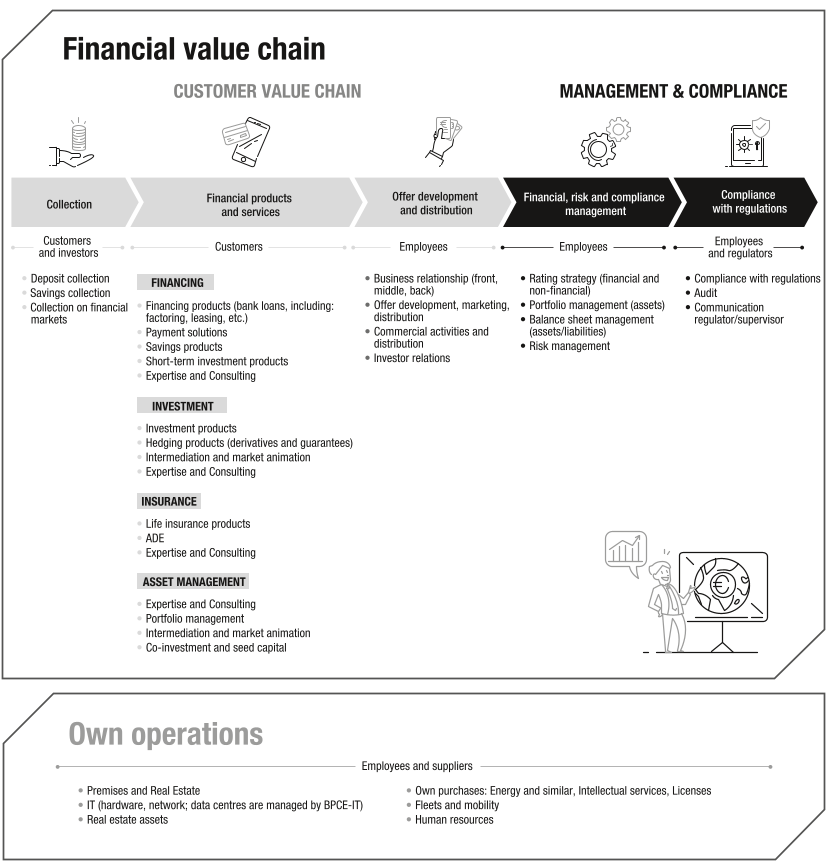
1.2.1.7Value chain
As a financial institution, Palatine receives funds in the form of deposits or purchases of financial instruments by investors and grants loans to its clients (banking transformation function).
The downstream value chain includes clients who benefit from Palatine's products or services, particularly loans.
1.2.2SBM-2 – Interests and views of stakeholders
It is essential for Palatine to take its stakeholders into account in order to improve how it identifies and assesses its sustainability impact. Palatine’s stakeholder consultation process is based on a number of systems that aims to involve them in its process of identifying and assessing impacts, risks and opportunities, as well as levers for improving both environmental and societal topics. These systems are detailed in the table below.
The expectations of Palatine's stakeholders are also identified and taken into account through regular contact with the senior executives of the Banques Populaires and Caisses d'Epargne, as the board members of Palatine are corporate officers of these institutions. But also via meetings with rating agencies, discussions with regulators, image surveys and prospective surveys. In addition, because of Palatine's desire to establish a quality relationship with its partners, the Bank collects "the voice of suppliers". A survey, rolled out in 2025, assessed suppliers' satisfaction with their working relationship with Palatine. This survey will be repeated in 2026. Listening to clients both in qualitative and quantitative terms is one of the founding principles of the approach which allows Palatine to better understand its clients and provide them with a tailor-made response. The customer listening system was overhauled in 2023 in order to solicit all of its customers to express their level of satisfaction and report any dissatisfaction. On two occasions, as part of the certification of the Bank for its CSR approach by the certification body AFNOR, in February 2024 and December 2025, Palatine called on a number of its stakeholders: whether they were internal (with its employees, members of the SEC; Groupe BPCE) or external (clients, partners, suppliers, high-level sportsmen or women supported by the Bank, associations, board members).
Finally, surveys of the Bank's employees, such as the Ipsos survey conducted in 2025, and regular meetings with staff representatives are all useful ways of identifying changes in stakeholder expectations. All these dialogues fed into Palatine's double materiality analysis.
Stakeholders
Dialogue methods
Purpose and results

Board members
- •Participation in specialised committees
- •Training programmes and seminars
- •Participation in the definition of strategic orientations
- •Monitoring function, in particular risk management and reliability of internal control

Employees
- •IPSOS survey (internal survey measuring Palatine's social climate) and job satisfaction barometer
- •Annual interviews
- •Training
- •Internal communication
- •Non-profit networks (women, intergenerational, LGBT+)
- •Employee whistleblowing rights
- •Consultation of employee representatives and representative trade unions
- •Improving quality of life at work, health and safety at work
- •Employee loyalty and commitment (career and talent management, skills and expertise development)
- •Participation of employee representatives in major strategic and transformation issues and negotiation of agreements
- •Measurement of satisfaction

Customers
- •Interviews
- •Strategic dialog to integrate ESG issues
- •Customer events
- •NPS satisfaction surveys
- •Institutional and commercial partnerships
- •Voting policies (available on the websites of the asset management subsidiaries)
- •Definition of offers and customer support
- •ESG dialogue: customer acculturation on ESG issues, support for transformation initiatives, risk assessment for better prevention and management by the customer and for incorporation of ESG criteria in the granting of loans
- •Improving customer satisfaction
- •Monitoring of the respect for compliance and ethics rules in commercial policies, procedures and sales
- •Complaint management
- •Mediation

Suppliers and sub-contractors
- •Responsible purchasing policy
- •Regular meetings with strategic suppliers
- •“Supplier voices” survey
- •Preparation of certifications
- •Listening system and satisfaction surveys
- •Supplier whistleblowing rights and establishment of an independent mediator
- •Audit
- •Responsible Supplier Relations Charter, involving suppliers in the implementation of duty of care measures
- •Compliance with ESG clauses included in contracts
- •Identification of progress plans to better understand supplier expectations
- •Improving the level of satisfaction and the relationship
- •Consultations and calls for tenders
- •Measurement of satisfaction

Institutions, federations, regulators
- •Regular meetings (public authorities, regulators, chambers of commerce and industry, etc.)
- •Contribution to the work of the financial market, participation in sectoral working groups
- •Responses to public consultations
- •Transmission of information and documents
- •Constructively contributing to public debate and participate in collective, fair and informed decision-making
- •Taking into account sector specificities
- •Regulatory compliance

Rating agencies, investors and independent third parties
- •Regular dialogue, participation in meetings (technical meetings, roadshows, conferences, etc.)
- •Transfer of information and documents for ratings/audits
- •Publication of official documents: annual report, half-year report, press releases, investor website
- •Improving transparency
- •Diversification of the Group’s refinancing, in particular by promoting the issuance of Green/social/sustainable bonds
- •Improving financial and non-financial ratings
- •Meeting the expectations and questions of investors and rating agencies
- •Publication of reports

NGOs and non-profits
- •Calls for projects
- •Sponsorship
- •Employee volunteering, skills sponsorship
- •Regular discussion
- •Contributions to market questionnaires
- •Board seats
- •Positive impacts through numerous cultural and solidarity initiatives in various fields: business creation, integration, solidarity, young people, sport, environmental protection, etc.
- •Improving transparency
- •Contribution of cross-expertise: banking/financial and better understanding of local players

Academic and research sector
- •Relations and partnerships with business schools and universities
- •Participation in forums and events
- •Discussions and consultations with scientific experts
- •Recruitment of work-study students and interns
- •Improving the employer brand
- •Contribution to the Group’s research, working groups and strategies
1.2.3Sponsorship policy - partnerships
Palatine's philanthropic commitment, coordinated by the Corporate Secretary's Office and the communication department, organises its actions around three priority areas: gender equality, sport and culture. In the sports field, Palatine works to promote gender equity and equity between able-bodied and para-athletes through initiatives such as the Palatine Women Project programme, support for athletes via the French Sports Foundation, and sponsorship of the Alice Milliat Foundation. The cultural sector also benefits from Palatine's support through partnerships with regional contemporary art structures (Contemporary Art Museums in Lyon, Bordeaux, Nantes, FRAC Sud in Marseille, Luma in Arles), the Opéra-Comique de Paris, and support for the audiovisual industry via the Gloria Palatine prize.
In addition to these priorities, Palatine supports the fight against cancer through its commitment to Cancer@work and the Institut Gustave Roussy, in particular through its participation in the Odyssea and Movember events, as well as a micro-donation system in 2025 for the benefit of Institut Curie and the Fondation des Femmes.
In 2025, Palatine intensified its environmental commitment by partnering with Planète Urgence for the MOSOTRY mangrove restoration project in Madagascar and by offering a tree to each employee via EcoTree in order to fight against climate change and the erosion of biodiversity. As a premium partner of the Paris 2024 Olympic and Paralympic Games, Palatine continued to support four athletes through the French Sports Foundation's performance pact, selecting a gender-balanced team. The Palatine Women Project programme is now in its fourth year, supporting ten high-level female athletes towards entrepreneurship. The commitment to the Alice Milliat Foundation has taken the form of actions in the field, raising awareness and promoting female athletes, particularly during the Festival des Sportives en Lumière and the Alice Milliat Trophies. Cultural patronage was renewed with several institutions and extended to LUMA Arles in 2025, thus supporting artistic creation and access to culture while developing social and educational initiatives. The collaboration with Série Séries was strengthened by the creation of the Gloria Palatine prize, rewarding the representation of women in the audiovisual industry.
Looking ahead, Palatine intends to continue and expand its commitments, in particular through the Palatine Women Project, including exploring the creation of a dedicated endowment fund, renewing its support for the French Sports Foundation, expanding its cultural patronage with the Centre d'art Caumont, and renewing its commitment to the French Golf Federation. In accordance with its CSR 2030 roadmap, Palatine will develop new partnerships with a positive societal impact, maintain its commitments to the fight against cancer, increase its contribution to biodiversity projects and continue to support the arts and culture.
1.3Governance
1.3.1GOV-1 - The role of the administrative, management and supervisory bodies
This part is described in detail in chapter 1.3 – Corporate Governance Report and in Section GOV-2 below.
1.3.2GOV-2 - Information provided to and sustainability matters addressed by the undertaking’s administrative, management and supervisory bodies
1.3.2.1Sustainability topics addressed by the administrative, management and supervisory bodies
Organisation of governance relating to Palatine’s sustainability matters
Palatine's decision-making bodies incorporate transparency, ethical behaviour, respect for stakeholder interests and the principle of legality. They also take the duty of care regarding CSR actions into account.
The Board of Directors is composed of eight board members (non-executive) and Executive Management is composed of a Chief Executive Officer and a Deputy Chief Executive Officer (both executives). On 31 December 2025, the Board of Directors was composed of four women and four men, including two board members representing employees. This brings the proportion of female board members on the Board of Directors to 50%, including those representing employees.
Sustainability matters come within the remit of two bodies within Palatine: the Corporate Secretary's Office (CSR Department) and the Sustainable Finance Programme. The Secretary General and the Programme Director both report to the Chief Executive Officer or the Deputy Chief Executive Officer and are members of Palatine’s Executive Management Committee, and the Secretary General is invited to attend the Executive Committee.
The Executive Committee validates the ESG strategy, ensures its implementation and oversees risk management (the composition and diversity of the Committees and Board of Directors, and of executive governance, the roles and responsibilities of the bodies are detailed in chapter 1.3 - Corporate Governance).
The Board of Directors meets as often as the company’s interests and legal and regulatory provisions require, and at least once per quarter. Several specialised committees have been set up by the Supervisory Board and carry out their activities under its responsibility. Their duties are defined in the Board of Directors’ internal rules. The Chair of each of these committees reports on the committee’s work to the Board.
Various CSR topics are submitted to the Board of Directors for information and decisions. In particular, in 2025, the following were presented: the 2024 sustainability report published in 2025, the double materiality matrix for the 2025 sustainability report, the progress on drafting the sustainability report, focuses on Palatine's actions relating to biodiversity and philanthropic actions, the outlook and challenges, as well as the calendar of CSR actions, the CSR and sustainable finance projects of the Palatine 2030 strategic plan, presented at a Board of directors' seminar and at a Board meeting, and the CSRD audit plan. The workplace equality policy was also discussed.
- •on a quarterly basis at the Executive Management Committee (comprising around fifteen board members representing the Bank's main business lines) and in particular during the progress review of the Palatine 2030 strategic plan;
- •regularly in the Executive Committee (e.g. approval to engage the bank in a CSR certification process, sponsorship, etc.).
Training of governance relating to Palatine’s sustainability matters
Information concerning sustainability expertise that members of the bodies possess directly or can mobilise is further elaborated in chapter 1.3. - report on corporate governance.
1.3.3GOV-3 - Integration of sustainability-related performance in incentive schemes
Concerning the members of Palatine's Board of Directors
Sustainability performance is not taken into account in the calculation of board members' remuneration, as presented in chapter 1.3 of the corporate governance report.
Concerning the effective managers who are members of executive management
- •A fixed remuneration which primarily reflects professional experience related to the position held and the responsibilities exercised, and is determined by comparison to market practices.
- •Annual variable remuneration, 40% of which is indexed to quantitative criteria (net revenue before tax, COEX and net result, Group share), 20% to criteria linked to BPCE's results and 40% to qualitative criteria, which can amount to, when the targets are met, 80% of the fixed remuneration for the Chief Executive Officer (50% for the Deputy Chief Executive Officer) and up to 100% of this same base amount (62.5% for the Deputy Chief Executive Officer) in the event of outperformance. These criteria are shared by the members of the Executive Committee and the Executive Management Committee.
The award of annual variable remuneration partly depends on the implementation of the bank's CSR goals. In recent years, CSR indicators have been: the professional equality index (5%), the increase in SRI outstandings (10%), the share of impact loans, including green loans, in the production of corporate loans (10%), the employee engagement rate (5%), assessment of the green strategy (5%), the NPS rate (10%), implementation of the CSR and green strategy (10%). They are reviewed annually. Those adopted for 2025 were as follows: CSR and green strategy (10%); NPS rate (10%).
The Board of Directors, through its Remuneration Committee, is responsible for setting the method and amount of remuneration for each effective manager. It ensures that CSR issues are fully integrated into the remuneration policy.
1.3.4GOV-5 - Risk management and internal controls over sustainability reporting
1.3.4.1Main features of the risk management and permanent control system related to the sustainability reporting procedure
Preparation and publication of sustainability information
The development and processing of sustainability information within Palatine is mainly the responsibility of:
- •General Secretariat including the CSR and Financial Communication Department;
- •Sustainable Finance Programme.
The General Secretariat, and more specifically the CSR Department, played a key role in coordinating the work of preparing the CSRD sustainability report:
- •coordination of project committee and governance internally, including interaction with other Group entities that prepare their own sustainability report;
- •operational coordination of the work carried out by all contributing departments;
- •increased coordination of the processes for producing the regulatory indicators required by the ESRS;
- •interaction with auditors.
- •coordinating and producing presentations of annual and half-yearly results, the financial structure to enable third parties to form an opinion on its financial strength, profitability and outlook;
- •coordinating and preparing the presentation of regulated financial information (annual and half-yearly report) filed with the French Financial Markets Authority (AMF).
The effective management of the sustainability report production process
The General Secretariat proposes, validates and implements the ESG strategy with the Sustainable Finance Programme. It plays a cross-functional role, carrying out the following key missions:
- •co-constructs the Palatine 2030 strategic plan for the Impact section on the E, S and G aspect;
- •develops and deploys ESG expertise and ensures that the Group is represented and communicates in the market;
- •conducts and interprets scientific and competitive monitoring and supports regulatory monitoring;
- •ensures overall coordination and supports each business line while implementing the necessary synergies.
- •double materiality analysis: this assessment was managed exclusively by the General Secretariat (for a detailed description, see ESRS 2 IRO-1);
- •the identification of impacts, risks and opportunities (IROs) relevant to the Bank’s activity was coordinated by the Corporate Secretary's Office, drawing on Groupe BPCE's work,
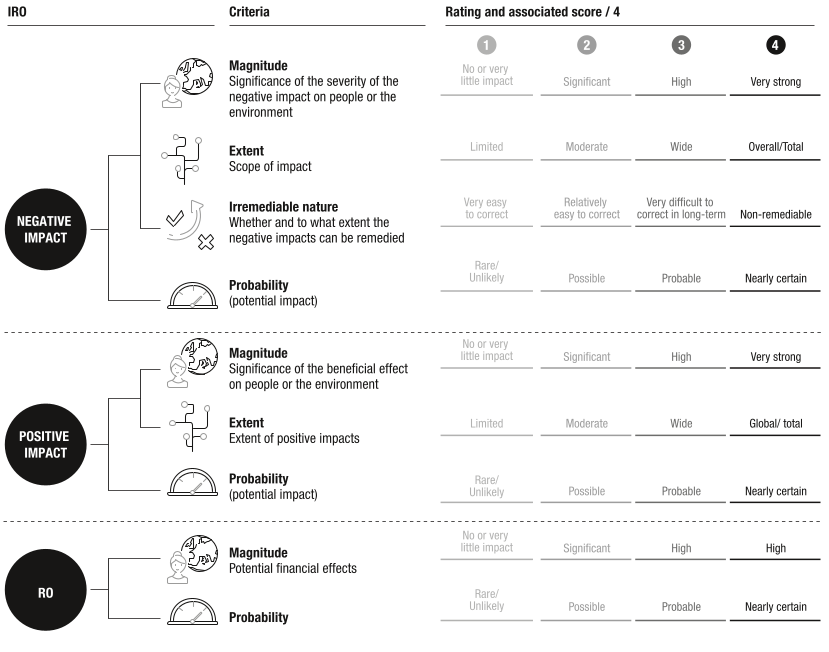
- •assessment of the materiality of these IROs: BPCE's Impact Department has established a methodology for rating IROs for the Group. At Palatine, this rating process was coordinated and supervised by the Corporate Secretary's Office, in liaison with the internal stakeholders mentioned above. The business lines and functional departments are responsible for rating the IROs within their scope;
- •communication strategy and editorial content: the General Secretariat is responsible for the bank's Impact strategy and ensures that the editorial content of the sustainability report is relevant and consistent with the bank's strategy on sustainability issues;
- •transition plan: Palatine does not have its own transition plan for this first financial year.
Organization of the permanent control system
The internal control system defined by Groupe BPCE contributes to the management of risks of all kinds. It is framed by a governing charter – the Group Internal Control Charter – which stipulates that this system is designed, in particular, to ensure “[...] the reliability of financial and non-financial information reported both inside and outside the Group”.
In connection with its governing charter, BPCE has defined a permanent control system aimed at ensuring the quality of the financial and non-financial information produced, in accordance with the requirements of the order of 3 November 2014 on internal control and all other regulatory obligations relating to the quality of reports. In order to ensure strict independence in the implementation of controls, this system is based on two levels of controls. This system has been set up within Palatine.
For the publication of sustainability information; this permanent control system aims to ensure, in particular, compliance with the requirements defined by the CSRD (Corporate Sustainability Reporting Directive) and by the Group in the preparation and publication of reports and management indicators.
First-level control framework
Each unit participating in the sustainability report process implements its own formal system of self-checks and controls aimed at identifying anomalies and putting in place remediation plans to resolve them sustainably.
The director responsible for the production and publication of the sustainability report ensures that these first-level controls are carried out by all parties involved in the production process.
- •the existence of a set of documents (procedures, operating guidelines and management framework) dedicated to the production of the sustainability report, describing the production process and the first-level controls envisaged;
- •the implementation of a self-monitoring procedure and hierarchical validation of the information provided in the sustainability report;
- •the implementation of checks to ensure compliance with regulations on data to be published, including in particular:
- •reconciliations with financial statements or other reports, where applicable,
- •analysis of changes;
- •a review of data collected from suppliers (external or internal), including a check on the quality of the sources (particular attention should be paid to computer-generated and manual sources);
- •the existence of audit trails, the establishment of the indicators communicated or used in the production of the report;
- •documentation and reporting of limitations (i.e. degraded procedures for the production of certain indicators).
Level two controls: independent review of the sustainability report
A second-level control, known as the Independent Review of Reports, is implemented by a function independent of the actors in charge of producing the sustainability report, namely the Financial Control of Palatine.
The main objective of this review is to obtain reasonable assurance that the report is produced and published in a satisfactory internal control environment and that it contains reliable, clear, useful and auditable data. It takes place in 3 main phases:
- 1a phase involving the implementation of Level 2 controls, structured around 6 areas of analysis focusing on the quality of the documentation (including the double materiality analysis - DMA), the robustness of the organisation responsible for producing and publishing the report, the quality of the audit trail for the data and/or indicators included in the reporting, the effectiveness of the Level 1 control framework, the accuracy of the published data and/or indicators and their consistency with the information contained in other publications, and the clarity of the information;
- 2a feedback phase: the results of the controls are set out in a summary report detailing the work carried out and its conclusions, specifying in particular any irregularities identified and, where applicable, the recommendations made (or action plans or corrective measures), and are then submitted to the Bank’s Internal Control Coordination Committee (3CI) and Audit Committee;
- 3a monitoring phase for corrective actions (recommendations issued) and/or identified areas for improvement: the implementation of corrective actions (action plans) and/or identified areas for improvement is monitored in conjunction with the business lines and after the publication of the sustainability report in order to strengthen the system for subsequent publications. This monitoring is reported to the Bank's Coordination Committee for Internal Control (3CI) and the Audit Committee.
1.3.4.2Main features of ESG risk management
Definition of ESG risks
Environmental risks
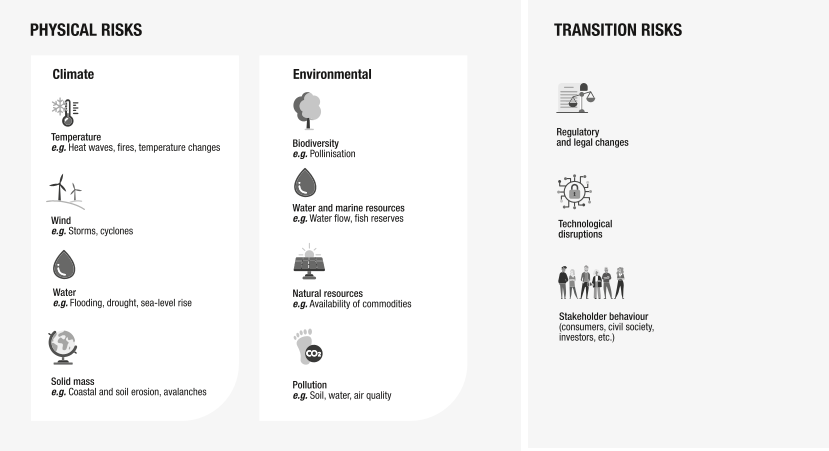
- •physical risks arising from the impacts of extreme or chronic climate or environmental events (biodiversity, pollution, water, natural resources) on the activities of Palatine or its counterparties;
- •transition risks arising from the impacts of the transition to a low-carbon economy, or one with a lower environmental impact, on Palatine or its counterparties, including regulatory changes, technological developments, and the behaviour of stakeholders (including consumers).
Social risks
Social risks arise from the impacts of social factors on Palatine’s counterparties, including issues related to the rights, well-being and interests of individuals and stakeholders (the Company’s workforce, employees of the Company's value chain, communities concerned, end users and final consumers).
Governance risks
Governance risks arise from the impacts of governance factors on Palatine’s counterparties, including in particular issues related to ethics and corporate culture (governance structure, business integrity and transparency, etc.), supplier relationship management, influence activities and business practices.
ESG risk management framework deployment program
The ESG Risk department coordinates the implementation of the ESG risk management system at Groupe BPCE level through a dedicated program. This program is part of the Vision 2030 strategic project and defines a multi-year action plan (2024-2026) aimed at covering all regulatory requirements relating to ESG risk management. It is directly linked to the strategy and actions implemented by the Impact program. This programme is monitored quarterly by the ESG Risk Committee and by the Groupe BPCE Supervisory Board.
- •ESG risk governance: committee procedure, roles and responsibilities, remuneration;
- •strengthening knowledge of risks: monitoring systems, sector analyses and assessments, risk benchmarks, risk analysis methodologies and processes, data;
- •the operational integration of the work: in coordination with other functions within the Risk Management Department, taking ESG risk factors into account in their respective management systems and decision-making processes;
- •consolidated risk management mechanisms: dashboards, contributions to RAF/ICAAP/ILAAP systems, training and acculturation plan for board members, senior executives and employees, contribution to extra-financial communication.
In 2025, this program was subject to occasional adjustments to take into account the gradual framing of certain work and the regulatory expectations resulting from the EBA guidelines on ESG risk management.
The execution of this program mobilizes the main internal stakeholders in terms of ESG risks, in particular the impact department, the teams and functions of the other departments of the risk department, the finance department, the compliance department, the technologies and operations department, the digital & payment department as well as Groupe BPCE business lines, in particular the departments in charge of developing sustainable finance activities.
Integration of ESG risks into the risk management framework
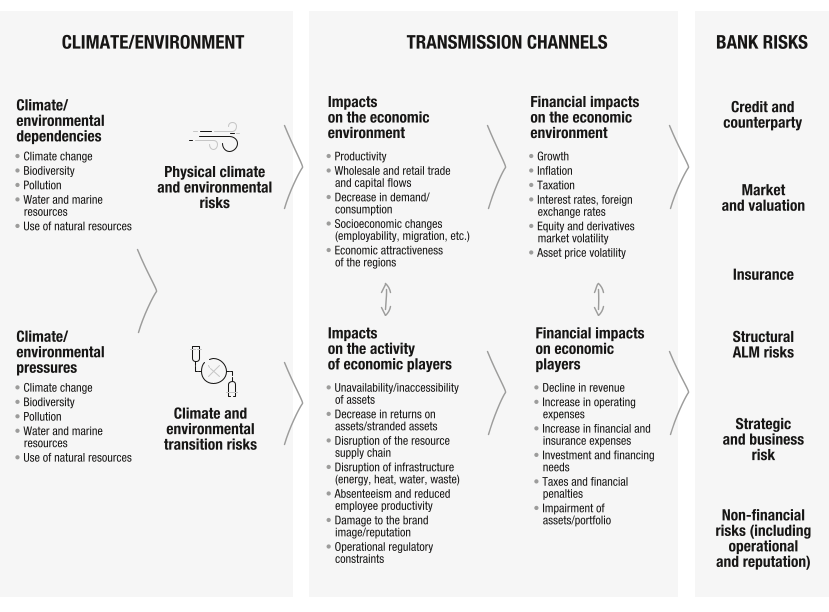
Based on specific ESG risk assessment methodologies, Groupe BPCE is gradually integrating ESG risk factors into its operational decisions through existing systems in the bank’s main risk channels.
The climate risk identification and assessment process is described in section 1.4.1.1.2 of the ESRS 2 chapter.
Non-financial risks notably cover business continuity risks, reputational risks and legal risks. Reputational risk has been identified as material in the sections on Climate change, Own workers, Consumers and end-users, and Business conduct. These various risks are covered in the following sections:
Business continuity risks
Groupe BPCE's incident tracking and operational risk monitoring tool makes it possible to specifically identify incidents related to climate and environmental risks, thus facilitating the continuous monitoring of their number and their financial repercussions.
As a preventive measure, as part of its business continuity system, Groupe BPCE assesses the climate and environmental risks to which its main operating sites (head offices and administrative buildings) are exposed. These risks are taken into account as part of the business continuity plans defined at the level of Groupe BPCE and its entities. These define the procedures and resources to be implemented in the event of natural disasters in order to protect employees, assets and key activities and ensure the continuity of essential services.
Groupe BPCE’s essential, critical or important service providers (PECI) are also subject to an assessment of their business continuity plan, which must take into account the climate and environmental risks to which they are exposed.
Reputational risk
The management of reputational risk arising from ESG issues is fully integrated into the overall reputational risk management system described in the dedicated section of the Pillar III report.
ESG issues are the subject of particular attention in Groupe BPCE's main operational decision-making processes, such as credit granting or purchasing processes, in order to ensure compliance with its voluntary commitments (ESG sector policies in particular) and to identify controversies likely to involve the Group. Specific provisions for crisis management are also provided for.
Reputation events related to ESG issues are subject to specific monitoring at Groupe BPCE level, carried out jointly by the communication department and the ESG risk department.
Legal risks
The legal risk management framework relating to ESG issues is part of Groupe BPCE's overall legal risk management system as well as the operational risk management framework, which includes the management of litigation and reputation risks. These frameworks define the governance mechanisms and procedures for escalating identified or actual litigation risks within Groupe BPCE.
The management of litigation risks in connection with ESG issues, and in particular climate and environmental issues, is notably based on a monitoring system implemented by the Legal department on litigation affecting large corporations and in particular financial institutions. Based on this monitoring, a quantification of the risk, through the definition of fictitious standard disputes to which the Group could be exposed, is carried out and integrated into the overall quantification of Groupe BPCE's legal risk.
The risk prevention and control system is based on existing decision-making processes to limit exposure to the risk of greenwashing and the risk of non-compliance with voluntary commitments as well as failures in the exercise of the duty of care.
1.3.5GOV 4 - Statement on due diligence
The table below maps the information concerning the due diligence procedure included in Palatine's sustainability report.
Core elements of due diligence
Sections in the statement relating to sustainability
a) Embedding due diligence in governance, strategy and business model.
1.2.1.1 / 1.2.1.2 / 1.3.2
b) Engaging with affected stakeholders in all key steps of the reasonable due diligence.
1.2.2
c) Identifying and assessing adverse impacts.
1.4.1 / 2.2.2.1
d) Taking actions to address those adverse impacts.
2.2.3.1 / 2.2.3.4 / 3.2.3.3 / 3.2.3.4 / 3.4.3.3 / 3.4.3.4
e) Tracking the effectiveness of these efforts and communicating.
2.2.3.10 / 2.2.4.1 / 3.2.4.1 / 3.4.4.1
1.4Impact, risk and opportunity management
1.4.1Double materiality analysis
The double materiality exercise is the starting point for the preparation of the sustainability report.
Double materiality has two dimensions: i) materiality from an impact point of view and ii) materiality from a financial point of view.
The impacts, risks and opportunities which are identified as material represent the matters on which the content of the sustainability report is based.
1.4.1.1Methodology for identifying impacts, risks and opportunities (IRO)
1.4.1.1.1Methodology applied to all impacts, risks and opportunities (IRO)
- 1Identification of topics, sub-topics and sub-sub-topics:
- •from ESRS 1 (AR 16.) : Identification was carried out for topics, sub-topics and sub-sub-topics as defined in ESRS 1 (AR 16.). This identification was carried out by mobilising internal sources, such as the ESG matters identified in Groupe BPCE’s 2022 and 2023 NFPS reports and the 2024 sustainability report, the reasonable due diligence process put in place by the Group as part of the duty of care plan and the existing risks mapping, supplemented by external sources, such as the analysis of a business sector benchmark, with a focus on the most relevant matters for banking players;
- •entity-specific: moreover, the analysis conducted by Groupe BPCE is not limited to the sub-sub-topics of ESRS 1 (AR 16.) ; the use of internal and external sources also leads to the identification of issues specific to the Group's banking and insurance activities. The following items have been identified as specific to Groupe BPCE and the resulting material IROs are included in the list of IROs (refer to Section 1.4.2 List of material IROs):
- −ESRS S1: the specific sub-topic: Attractiveness, employee loyalty and engagement (including the specific sub-sub-topics: Listening to employees and strengthening their commitment, Integration of new recruits and employee loyalty, Recruitment strategy and employer brand);
- −ESRS G1: the specific sub-topic: Fight against money laundering and the financing of terrorism and compliance with sanctions measures (national, European or international), embargoes and asset freezes;
- In 2025, the relevance of the list of the Group's topics, sub-topics and sub-sub-topics was questioned. In view of the Group's benchmark and challenges, this list has not changed.
- 2Formulation of Impacts, Risks and Opportunities (IRO): work to identify the IRO within each topic was carried out in order to cover both impact materiality and financial materiality. Several internal and external sources were used to identify IROs. For the purposes of double materiality analysis, risks and opportunities generally arise from a positive or negative impact, or from the Group's dependence on resources and people.
- 3Relevance of the IRO: the relevance of each IRO was verified with the business lines concerned to ensure that the listed IRO effectively reflected a Risk, Opportunity or Impact for Groupe BPCE, to qualify the Impacts as positive or negative for the same sub-topic and to avoid duplication between similar IRO. In 2025, the relevance of the IRO identified in 2024 was reviewed and work was carried out to group the IROs together to avoid the same subject being dealt with by several IRO of the same type.
- 4Characteristics of the IRO: for each IRO identified, a rating was prequalified. This prequalification consisted of:
- - positioning each IRO in Groupe BPCE’s value chain, i.e. upstream, within its own activities, or downstream;
- - defining the potential or actual nature of the negative and positive impacts.
Consideration of the value chain in the identification of Palatine's IROs
The activities of Palatine and its entire upstream and downstream value chain were taken into account in the double materiality analysis. The following guidelines were adopted in view of the specific nature of Palatine's business segment:
- •Mapping its activities and the players in the value chain to identify which players are in risk areas;
- •Carrying out an analysis by major families of players: customers, suppliers, subcontractors, etc.;
- •extending this analysis beyond first-level and direct business relationships: the business lines took into consideration, in addition to the major families of direct stakeholders in the value chain, the entire environment surrounding them, in particular through sectors analysis.
Most of Palatine's activities are focused on financing and investment activities (see presentation of the value chain, section SBM-1 1.2.1.7 Value chain).
Organisation in terms of identifying impacts, risks and opportunities
The identification of IROs was coordinated by the Corporate Secretary's Office (CSR Department). The resources and work environment, risk and compliance, sustainable finance, communication, and finance teams, as well as the subsidiary Palatine Asset Management, helped to formalise and assess these IROs.
1.4.1.1.2Focus: climate and environmental risks (E1 IRO-1)
Process for identifying and assessing climate risks
Palatine relied on the work carried out by Groupe BPCE to set up a process for identifying and assessing the materiality of climate and environmental risks aimed at structuring the understanding of the risks to which the Bank is exposed in the short, medium and long term, and to identify priority areas for strengthening the risk control system.
At Groupe BPCE level, this process is coordinated by the ESG risk department, under the supervision of Groupe BPCE’s ESG Risk Committee and Supervisory Board. It is reviewed annually to update the underlying scientific knowledge and methodologies.
- •creation of the risk framework;
- •documentation of climate risk transmission channels;
- •assessment of the materiality of climate risks in relation to the other risk categories;
- •input into cross-functional risk management exercises (risk appetite system, ICAAP, ILAAP).
Group risk framework
Groupe BPCE has set up an environmental risk framework which makes it possible to define the contingencies covered. This framework is based on current scientific knowledge and reference regulatory texts (e.g. European taxonomy) and aims to provide the most comprehensive possible representation of the hazards.
The climate and environmental risks included in the risk framework currently defined by the Group are presented below:
Climate and environmental risks
Risk transmission channels
ESG risks are risk factors underlying the other risk categories to which Groupe BPCE is exposed, namely credit and counterparty risks, market and valuation risks, insurance risks, structural balance sheet risks, strategic and business risks and non-financial risks (operational risks, reputational risks, non-compliance risks, insurance risks etc.), as identified in Groupe BPCE’s risk taxonomy.
These transmission channels involve the impacts of climate risks on activities and business models, which are reflected in financial variables at the macroeconomic or microeconomic level and ultimately modify Groupe BPCE’s risk exposure. These risks may materialise directly, in connection with Groupe BPCE’s own activities, or indirectly through the counterparties to which Groupe BPCE is exposed as part of its financing or investment activities. They are summarized in the diagram.
1.4.1.13Focus: IRO Nature (E2 IRO-1, E3 IRO-1, E4 IRO-1, E5 IRO-1)
The process of identifying the impacts of environmental issues, excluding climate change, at Groupe BPCE level was carried out across the entire value chain. Impacts have been identified on own operations and on financing and asset management operations. The rating of the scale of these impacts was carried out using the resources presented in section 1.4.1.2.3 Rating. With regard to risks, the rating was based, in particular, on a sectoral analysis of Groupe BPCE's exposures, with a focus on Palatine's exposures, as part of the assessment of the magnitude.
The process of identifying and assessing environmental risks, excluding climate, is part of the same system for assessing the materiality of climate and environmental risks set up by Groupe BPCE.
With regard to opportunities, the identification and assessment process was carried out by experts taking into account economic changes related to environmental issues, excluding climate change, and Groupe BPCE’s outlook to adapt its banking, insurer and investor business models.
1.4.1.2IRO rating methodology
After this first identification stage, among all the IRO identified as relevant, the impacts, risks and opportunities rating led to designate those that are material from an impact point of view or from a financial point of view, which are presented in this sustainability report.
1.4.1.2.1Rating scales
The ESRS impose criteria for assessing the materiality of IROs. These criteria may be different depending on whether one is related to an impact (negative or positive), a risk or an opportunity. Rating scales are not prescribed by the ESRS. They have been defined by and for Groupe BPCE. Each rating criterion was assessed on a scale from 1 to 4.
1.4.1.2.2Rating criteria
1.4.1.2.3Rating
Impact materiality rating
The impacts are rated by the contributors identified for each topic and the review is carried out cross-functionally by the CSR department.
- •For the rating of climate impacts via financing and investments, Palatine relied on its 2024 carbon footprint and its renewable energy exposures to assess the scale (E1);
- •For the rating of Nature impacts (covering ESRS E2 to E5) via financing and investments, in 2025, the rating of these impacts based on expert opinion was supplemented by quantitative analyses using the ENCORE databases. This work made it possible to quantify the scale of Palatine's impact on nature by making the link between the sectors of activity in which the companies that Palatine finances operate and the intensity of the pressure exerted by each sector on the environment. These analyses cover exposures to non-financial companies in the FINREP scope;
- •For the rating of the negative impacts concerning ESRS S2, Palatine relied on a sectoral analysis of its exposures (sensitive sectors according to the OECD); Regarding its geographic analysis, as Palatine is a bank established in France, its exposures are mainly French or EU;
- •For the rating of a positive impact concerning ESRS G1, the Group relied on a questionnaire sent to its suppliers to measure their level of satisfaction with payment terms.
Financial materiality rating
The risk rating is carried out by the identified contributors for each subject and reviewed cross-functionally by the risk department. The rating of risks is consistent with the risk materiality assessment exercises carried out within Palatine, in particular the risk materiality assessment carried out as part of Palatine's risk appetite framework.
This reference work is supplemented by expert opinion as part of the double materiality analysis in order to specifically qualify the risks selected (according to the probability and magnitude scales defined above).
Focus: climate risks (E1 IRO-1)
Based on the transmission channels identified, Groupe BPCE assesses the materiality of the climate and environmental risks in relation to the main risk categories to which it is exposed. This assessment distinguishes between physical risks and transition risks for the climate risks on the one hand, and the environmental risks on the other. It is carried out according to three time horizons: short-term (one to three years, financial planning horizon), medium-term (strategic planning horizon, 5 to 7 years), and long-term (~ 2050).
This assessment is based on quantitative or qualitative indicators, which, when available, allow us to assess exposure to risks from a sectoral and geographical point of view, as well as on expert assessments. The internal experts involved in these assessments include the ESG Risk Department, the other risk divisions, as well as representatives from other departments (impact, compliance, legal) and the business lines concerned.
In 2025, the materiality analysis was carried out at the Groupe BPCE level, covering both climate and environmental risks. It was also applied at the level of the main operating entities, based on assumptions and a common analytical framework.
Integration into Groupe BPCE’s risk appetite framework
The work to identify ESG risks and assess their materiality feeds into the main components of Groupe BPCE’s risk appetite as part of this system's annual review process.
Groupe BPCE’s risk framework includes an “Ecosystem risk” category, which groups together environmental risks by distinguishing between physical and transition risks, social risks and governance risks.
The materiality assessment of these risk categories as part of the risk appetite system is defined by cross-referencing the materiality of the main risk categories to which Groupe BPCE is exposed (assessed as part of the annual process of defining the risk appetite) and the materiality of climate and environmental risks in relation to these risk categories. For social and governance risks, the assessment is carried out on an expert basis as part of the risk appetite definition process only.
These assessments make it possible to prioritize the issues related to each risk category, including those related to ESG risks. In 2025, the materiality of physical and transition environmental risks was assessed at level 1 out of 3 (“significant”) for Groupe BPCE, while the materiality of social and governance risks was assessed at a level of 0 out of 3 (“low”).
Use of scenarios
As part of its strategic business line planning and management and the management of risks, Groupe BPCE uses climate scenarios to assess the challenges associated with short-, medium- and long-term climate risks.
These scenarios come from leading institutions in scientific research on the climate, such as the Intergovernmental Panel on Climate Change (IPCC), the Network for Greening the Financial System (NGFS) or the International Energy Agency (IEA).
The choice of scenarios selected by the Group is based on multidisciplinary work between the main departments involved in strategic planning and risk management. They are validated by Executive Management by the bodies overseeing the various exercises using these scenarios.
Scenarios used in risk management
Groupe BPCE mainly relies on the SSP2-4.5 (IPCC scenario) and Nationally Determined Contributions (NGFS scenario) scenarios to define a median trend for risk monitoring purposes.
For its risk assessment purposes in a deteriorated context, in stress test exercises for example, Groupe BPCE also relies on alternative, more extreme scenarios: SSP5-8.5 scenario (IPCC scenario) on physical risk and Net Zero 2050 and Delayed Transition scenarios (IPCC scenarios) on transition risk.
ESG risk measurement tools and methodologies
In order to strengthen its ESG risk assessment capabilities, Groupe BPCE has adopted specific methodologies to assess the ESG risks associated with its exposure portfolios in a systematic and consistent manner. These methodologies are based on internal and external expertise, and reflect the state of scientific knowledge, technologies and the current regulatory environment, as well as market practices. They are regularly reviewed, supplemented and enhanced to gradually improve the accuracy of ESG risk assessment and take into account changes in the context.
Assessment of environmental risks
Groupe BPCE's physical and transition risk assessment methodologies are based on quantitative data supplemented by qualitative analysis where appropriate. They are described in the paragraphs below.
Physical environmental risk assessment
Geo-sectoral assessments
In order to strengthen the sensitivity and robustness of its assessments of the physical risk associated with the outstanding financing for professional and corporate customers, Groupe BPCE developed a methodology for analysing the vulnerability of the outstandings to physical risks.
This internal methodology makes it possible to take into account the intrinsic vulnerability of a sector to physical risks and the exposure of a given geographical area to physical risk. It is currently broken down into a fine-grained sectoral grid (NACE2) and a national or regional geographic grid for countries where Groupe BPCE has a particular concentration of outstandings (France, United States). Six physical climate risks are currently covered, which are among the most representative for Groupe BPCE, and can be simulated under different scenarios and time horizons.
Home loan portfolio
Given its high exposure to home loans issued to individuals, Groupe BPCE has adopted a tool to simulate the physical risks of its financed assets. This tool takes into account the exact coordinates of the asset to assess its risk exposure and certain characteristics to estimate its vulnerability to determine the estimated damages under different scenarios and time horizons. At present, this tool covers the territory of mainland France and Corsica and makes it possible to assess exposure to the two main physical risks for this portfolio (drought - shrink-swell and floods).
Transition environmental risk assessment
Sectoral assessments
In order to strengthen the sensitivity and robustness of its assessments of the transition risk associated with financing outstandings for professional and corporate customers, Groupe BPCE developed a methodology for the granular analysis of the sensitivity of sectors to this risk.
This internal methodology makes it possible to assign a sectoral score reflecting the transition risk associated with a given NAF code, taking into account the carbon emissions and the main environmental impacts of the companies in the sector.
Home loan portfolio
To assess the transition risk on its home loan portfolio, Groupe BPCE relies on the Energy Performance Certificate (EPC) of the financed real estate assets. The EPD of the financed asset is collected systematically, making it possible to capture both the risk on the repayment capacity of the loan in the event of an increase in energy expenditure or expenses related to the financing of work to improve energy performance and the risk of loss of value of the asset due to a deteriorated EPD, making it potentially unfit for use in the rental context given the regulations in force.
1.4.1.2.4Calculation methodology
Impacts
- •Positive impacts: when the impact is positive, the irremediable character is not assessed and is therefore not taken into account in the calculation;
- •Actual and potential impacts: the likelihood of occurrence is calculated when the impact is potential. For almost all of the impacts identified by Groupe BPCE, the impacts occurred during the past fiscal year but are not systematically at the higher level (assessed at a level 4);
- •Final rating: the final impact rating is within a range of 1 to 16, with 16 as the maximum score. To bring the final impact rating to the same level of the criteria rating scale of 4, the final impact rating is then divided by 4. This is then called the final rating.
Risks
The risk rating is assessed according to the couple formed by the two axes (likelihood, magnitude). In line with the approach adopted for the risk appetite framework, the final risk rating is carried out on a scale of 0 to 3 according to the matrix below defined according to the pair (likelihood, magnitude).
Opportunities
- •Final rating: The final opportunity rating is within a range of 1 to 16, with 16 as the maximum score. To bring the final opportunity rating to the same level as the criteria rating scale, i.e. 4, the final opportunity rating is then divided by 4. This is then called the final rating.
1.4.1.2.5Determination of materiality thresholds
Materiality threshold refers to the score or rating based on which impacts, risks and opportunities are material.
Palatine’s materiality thresholds are defined by the CSRD Project Steering Committee of Groupe BPCE.
After this first identification stage, among all the IRO identified as relevant, the impacts, risks and opportunities rating led to designate those that are material from an impact point of view or from a financial point of view, which are presented in this sustainability report.
Materiality threshold for impacts and opportunities
An impact or opportunity is material when the rating level is greater than or equal to 3, corresponding to a high or very high level:
Materiality threshold for Risks
In 2025, the risk materiality threshold was modified to align with the Group's risk appetite framework.
In the double materiality analysis, any risk with a score of 1, 2 or 3 in the matrix (presented below in Calculation methodology - risks) is considered material.
1.4.1.2.6Results
Material ESRS in 2025
ESRS Standard
Sub-topic
Financial materiality
Impact materiality
E1: Climate change
Climate change mitigation – own footprint
Climate change mitigation and adaptation - financing and investments
S1: Own workers
Working conditions
Equal treatment and opportunities for all
Attractiveness, employee loyalty and engagement
S4: Consumers and end-users
Impacts related to consumer and end-user information
Financial inclusion and accessibility of the offer
G1: Business conduct
Ethics and corporate culture
Management of relationships with suppliers including payment practices
Changes 2024/2025
Between the 2024 and 2025 financial years, two topics became non-material for Palatine: ESRS S2 (Workers in the value chain) and ESRS S3 (Affected communities).
- •regarding ESRS S2: given the nature of Palatine's activity and its value chain, the impacts relate more to working conditions than human rights, leading business experts to reassess the probability of these impacts downwards for the bank. The bank is rarely concerned by unethical practices or practices that derogate from human rights; its activities were mainly in France;
- •regarding ESRS S3: this concerns communities affected by funding and investments made in social projects within the territories, such as the financing of local authorities, social landlords, sports infrastructure, health infrastructure, the social and solidarity economy, etc. This is not Palatine's target market. The number of people benefiting from initiatives promoting economic growth, including the improvement of the living conditions of stakeholders impacted by Palatine's regional anchoring policies, can be considered average at the level of each region. The magnitude of the regional impact of Palatine's financing is limited in view of its size and national presence.
Furthermore, regarding ESRS E1 (Climate change), one IRO became non-material in 2025: "risk of financial losses arising from reputational risk or legal/sanction risk associated with financing or investment transactions involving counterparties, activities or projects with high greenhouse gas emissions intensity": Palatine is less exposed than Groupe BPCE to the sectors with the highest emissions, as BPCE operates across 11 of the sectors with the highest emissions in terms of decarbonisation trajectories, whereas Palatine is primarily involved in two sectors (residential and commercial real estate). And a new IRO has been identified as material: risk of financial losses arising from a turnover risk related to changes in the sector mix of the financing portfolio and increased competition, and from an interest rate risk stemming from general trends in interest rates and inflation should the transition accelerate.
Lastly, for the 2025 fiscal year, as mentioned in the IRO identification section, Groupe BPCE has grouped together, where relevant, the IROs identified in 2024 which concerned the same sub-topics or sub-sub-topics, in order to avoid potential redundancies. Palatine applied the same groupings, which simplified the overall number of IROs.
1.4.1.3Stakeholder consultation
Although stakeholder consultation is not mandatory as part of the double materiality exercise, Palatine considered it important to seek the views of some of its stakeholders through various channels, notably by establishing permanent feedback systems and the use of specific tools, as they play a key role in providing relevant information for publication on sustainability issues, by drawing on their wide-ranging expertise.
The stakeholders that were consulted and the modalities for dialogue are described in detail in Section 1.2.2 SBM-2 – Interests and Views of Stakeholders.
1.4.1.4Governance of the double materiality analysis
Role of the impact department and the ESG risk department
- •the impact department has established the methodology for rating impacts and opportunities on behalf of the Group;
- •the ESG risk department has established the risk rating methodology on behalf of the Group.
The impact department and the ESG risk department have coordinated and supervised the IRO rating project on behalf of the Group.
Operating procedure for rating IROs
Groupe BPCE’s impact department and ESG risk department proposed the methodological approach for rating IROs as part of the "CSRD Project".
Within Palatine, several functional departments were called upon as part of the IRO rating process. These notably include:
- •the Corporate Secretary’s Office;
- •the Risk and Compliance department;
- •the human resources department;
- •Sustainable Finance Programme;
- •the finance department;
- •the environment and purchasing department.
Process for validating the ratings of impacts, risks and opportunities
The validation of the IROs is initially carried out through workshops attended by representatives from the business lines concerned for each topic and sub-topic, then by the CSRD Project Steering Committee at Palatine.
Internal control
- •line control: each business line contributor must ensure that all fields in the IRO rating file are correctly completed and must have the list of relevant and material IROs validated by the line manager of their department/division;
- •N/N-1 evolutions: each business line contributor must justify the evolution of IROs between N-1 and N, by highlighting: new IROs (inputs), IROs considered irrelevant/material in N (outputs) and justify these changes.
- •review of the file: the 2nd level controller ensures that the IRO rating file is completed exhaustively and that the different columns are consistent with each other;
- •IRO consolidation table: the 2nd level controller checks the consistency of the N/N-1 evolutions using an IRO consolidation table.
1.4.1.5Consolidation process
- •use the impacts, risks and opportunities identified by Groupe BPCE that are relevant to Palatine’s business;
- •identification of IROs specific to the activity of Palatine, Palatine Asset Management and Ariès;
- •assessment of the materiality of these impacts, risks and opportunities.
1.4.1.6Review process
The sustainability report is prepared on an annual basis. If Palatine concludes, on the basis of audit evidence, that the results of the double materiality exercise for the previous year are still relevant at the reporting date, it can use the conclusions obtained previously to prepare the sustainability report.
Each year, Palatine will verify the elements that may trigger a revision of the list of material IROs; for example, a major merger and acquisition transaction leading to a new activity, an entry into a new sector or a significant change in operations, a global event (pandemic, natural disaster, etc.), a change in scientific evidence that could affect the severity criteria.
1.4.2List of material IROs
Climate change (ESRS E1)
Sub-sub-topic
Type of IRO
IRO heading
Value chain
Time
horizonClimate change mitigation and adaptation
Climate change mitigation – own footprint
Negative impact
Negative impact on the climate due to greenhouse gas emissions from Palatine’s own operations
Own operations
Long term
Climate change mitigation
and adaptation - financing
and investmentsNegative impact
Negative impact on the climate due to Palatine's financing and investments in greenhouse gas emitting sectors
Downstream
Invariable
Opportunity
Business opportunities related to financing solutions to support clients in their transition and adaptation to climate change, as well as sustainable savings products invested in companies to support their transition
Downstream
Long term
Risk
Physical
Risk of financial losses arising from credit or market risk related to financing or investment transactions in counterparties, activities or projects sensitive to physical climate risk factors
Downstream
Long term
Transition risk
Risk of financial losses arising from credit or market risk related to financing or investment transactions in counterparties, activities or projects sensitive to transition climate risk factors
Downstream
Medium term
Transition risk
Risk of financial losses resulting from a turnover risk related to a change in financing portfolio sector mix and an increase in competition, and interest rate risk from the general evolution of interest rates and inflation in the event of an acceleration in the transition
Downstream
Medium term
Social
Sub-sub-topic
Type of IRO
IRO heading
Value chain
Time
horizonAttractiveness, employee loyalty and engagement (IRO specific to Palatine)
Listening to employees and strengthening their commitment
Risk
Financial risk of deviation from employees’ expectations due to the absence and/or inadequacy of listening systems and action plans to strengthen their commitment
Own operations
Invariable
Integration of new hires and strengthening employee loyalty
Positive impact
Positive impact of the employee experience contributing to a welcoming environment for Palatine’s employees (pre-boarding, onboarding, induction programme and individualised training course)
Own operations
Invariable
Recruitment strategy and employer brand
Opportunity
Financial opportunity for Palatine to strengthen its employer brand image and its attractiveness on the job market with a digital and inclusive recruitment strategy
Own operations
Long term
Working conditions
Social dialogue (freedom of association and collective bargaining)
Positive impact
Positive impact on employee commitment and performance via sustained and constructive social dialogue at Palatine level (regular meetings with the staff representative bodies and conclusion of collective agreements)
Own operations
Invariable
Quality of life at work and risk prevention and safety at work
Risk
Financial risks arising from an operational risk related to employee turnover, absenteeism and disengagement (recruitment and training costs, loss of performance, loss of talent)
Own operations
Invariable
Risk
Financial risks arising from an operational risk for Palatine in the event of a danger to the health and safety of employees
Own operations
Invariable
Positive impact
Positive impact on employees' quality of life at work of secure working conditions and work environment adapted to the well-being of employees (working time, remote working, reorganisation of premises, work/life balance, etc.)
Own operations
Invariable
Decent pay and social protection
Positive impact
Positive impact for employees of clear, fair, well-understood remuneration exceeding legal minimums, and solid protection exceeding legal obligations
Own operations
Invariable
Equal treatment and opportunities
Training and skills development
Positive impact
Positive impact on employees thanks to a skills management, career management and professional mobility system
Own operations
Invariable
Opportunity
Financial opportunity for Palatine to encourage the development of internal skills and capitalise on expertise and knowledge in order to strengthen employee commitment (reduction in the turnover rate, reduction of operational risk, etc.)
Own operations
Invariable
Diversity & inclusion (disability, discrimination & harassment)
Positive impact
Positive impact in terms of diversity, inclusion, professional equality and support for people with disabilities
Own operations
Invariable
Sub-sub-topic
Type of IRO
IRO heading
Value chain
Time
horizonImpacts related to consumer and end-user information
Personal data protection and cybersecurity
Risk
Risk of financial losses arising from legal and/or reputational risk in the event of failure in the implementation of measures to protect clients' personal data
Downstream
Medium term
Financial inclusion and accessibility of the offer
Access to products and services and responsible marketing practices
Opportunity
Financial opportunity related to the development of new innovative products and services opening up new markets and client segments
Downstream
Long term
Positive impact
Positive impact on clients by offering products and services adapted to the needs of all clients and economic players, including those in financial difficulty, and by ensuring global geographical coverage and adapted digital solutions
Downstream
Invariable
Non-discrimination
Negative impact
Potential negative impact on clients in the event of Palatine's failure to apply anti-discrimination measures (client choice, access to finance or essential services)
Downstream
Invariable
Governance
Sub-sub-topic
Type of IRO
IRO heading
Value chain
Time
horizonEthics and corporate culture
Fight against corruption
and briberyRisk
Risk of financial losses arising from reputational risk or legal/sanction risk associated with a failure to comply with anti-corruption obligations
Own operations
Invariable
Combating money laundering and the financing of terrorism, and compliance with national, European or international sanctions, embargoes and asset freezes
Risk (specific to Palatine)
Risk of financial losses resulting from a legal risk/sanction related to a failure to implement obligations to combat money laundering and the financing of terrorism and, more broadly, to prevent and detect criminal financial behaviour by clients, and in terms of the implementation of sanctions (embargoes, sectoral sanctions, asset freezes)
Own operations
Invariable
Management of relationships with suppliers including payment practices
Management of relationships with suppliers including payment practices
Positive impact
Positive impact on suppliers via Palatine's responsible purchasing commitment policies, in particular on the management of payment terms
Upstream
Invariable
1.4.3SBM 3 - Material impacts, risks and opportunities and their interaction with strategy and business model
The material impacts, risks and opportunities (IRO) resulting from the double materiality analysis are listed in section 1.5.1 (IRO-1) Management of impacts, risks and opportunities. This description makes it possible to identify where in its business model, its own activities or its value chain these material IRO are concentrated.
The business model, value chain and integration of sustainability matters into Palatine’s strategy are detailed in Section 1.2.1.2 Sustainability-related targets.
The interactions between these material impacts, risks and opportunities, Palatine's business model and strategy, embodied by Palatine 2030, as well as how positive or negative material impacts affect society (clients, regional players or employees) or the environment are presented inside each topical ESRS.
Palatine did not record any credit losses related to climate risks or related provisions. The current financial effects of material risks are not recognized in Palatine's financial statements as impairments for the effects of physical and transition risks on credit risk.
In terms of climate risk, Palatine benefits from the analysis of the resilience of Groupe BPCE's business model across its three activities (financing, insurance, asset management) through climate stress tests as part of its self-assessment processes for capital adequacy (ICAAP) and liquidity (ILAAP) in light of the risks to which it may be exposed. This analysis is presented in chapter E1 – Climate change in section 2.2.6.2 (ESRS 2 SBM-3) Strategy and business model resilience.
-
3Board of Directors’ corporate governance report
In addition to the Board of Directors’ management report and pursuant to the provisions of articles L. 225-37 and L. 225-37-4 of the French Commercial Code, the Board of Directors reports on the following in this report:
- •the composition of the board, the conditions for the preparation and organisation of the work of the Board of Directors, the rules and principles governing the determination of remuneration and benefits of any kind granted to corporate officers;
- •draft resolutions regarding remuneration which will be submitted to you at the time of the General Meeting called to approve the financial statements for the year ended 31 December 2025.
The items of the report required under article 266 of the order of 3 November 2014, modified by the order of 28 July 2021 and the list of the terms of office held by the corporate officers during the 2025 financial year, are appended.
This report was previously presented to the Appointments Committee and Remuneration Committee meeting of 24 April 2026, before being approved by the Board of Directors on 29 April 2026.
In their report prepared pursuant to article L. 22-10-71 of the French Commercial Code, the Statutory Auditors attest the other information required by article L. 225-37 of the French Commercial Code (presented in the corporate governance report), and if applicable, present their observations.
3.1Corporate governance
The AFEP-MEDEF Corporate Governance Code for listed companies, updated in December 2022 and incorporating the recommendations on remuneration for senior executives, is the code used by Palatine to prepare this report.
Some provisions are not relevant to the context of Palatine, since its share capital is held in its entirety by BPCE. Consequently, the following provisions have not been taken into account to date (the complete details are available below):
- •the proportion of independent members of the Board of Directors and its committees created by the Board of Directors: Palatine is a 99.9%-owned subsidiary of BPCE. In this context and in view of Palatine’s position within Groupe BPCE, a direct shareholder representation (the Chairman and a representative) as well as of Groupe BPCE via the senior executives of the Banque Populaire and Caisse d’Epargne banks was favoured in order to maintain a balance of powers and a balanced representation of the Banque Populaire and Caisse d’Epargne networks. This diversity of profiles on the Board of Directors promotes the quality of work and discussions within the board, an objective pursued by the recommendation of the AFEP-MEDEF Code;
- •ownership of a significant number of Banque Palatine shares by the board members. Pursuant to article 11 of the articles of association, the board members are not obliged to be company shareholders.
Two board members were elected by employees - one representing managerial-level employees and the other representing technical and supervisory-grade staff.
On 31 December 2025, the Board of Directors was composed of four women and four men, including two board members representing employees. Thus, the percentage of female board members on the Board of Directors was 50%, including female board members representing employees.
- 1Missions of the Board of Directors
Recommendations implemented
- 2Board of Directors: collegiate body
Recommendations implemented
- 3Diversity of methods of organisation of governance: separation of the duties of the Chairman and the Chief Executive Officer
Recommendations implemented
- 4Board of Directors and communication with shareholders and the market
Recommendations implemented
- 5The Board of Directors and social and environmental responsibility
Recommendations implemented
- 6Board of Directors and General Shareholders' Meeting
Recommendations implemented
- 7Composition of the Board of Directors: guidelines
Recommendations implemented
- 8Gender diversity policy within the governing bodies
Recommendations implemented
- 9Representation of employee shareholders and employees
Recommendation implemented / not relevant for Palatine as regards employee shareholders
- 10Independent board members
Recommendation not implemented due to the necessary balanced representation of Groupe BPCE institutions and the bank’s status as a wholly-owned subsidiary
- 11Board appraisal
Recommendations implemented
- 12Board and committee meetings
Recommendations implemented
- 13Access to board member information
Recommendations implemented
- 14Board member training
Recommendations implemented
- 15Board members’ terms of office
Recommendations implemented
- 16Board committees: general principles
Recommendations implemented
- 17Audit Committee
Recommendations partially implemented (not followed for the proportion of independent board members due to the necessary balanced representation of Groupe BPCE institutions and the bank’s status as a wholly-owned subsidiary)
- 18Committee responsible for appointments
Recommendations partially implemented (not followed for the proportion of independent board members due to the necessary balanced representation of Groupe BPCE institutions and the bank’s status as a wholly-owned subsidiary)
- 19Committee responsible for remuneration
Recommendations partially implemented (not followed for the proportion of independent board members due to the necessary balanced representation of Groupe BPCE institutions and the bank’s status as a wholly-owned subsidiary)
- 20Number of terms for executive directors and board members
Recommendations implemented
- 21Board members’ ethics
Recommendations implemented
- 22Remuneration of board members
Recommendations implemented
- 23Termination of employment contract for corporate office
Recommendations implemented
- 24The obligations for executive directors to hold shares
Recommendations not implemented / not relevant for Palatine (absence of direct ownership of shares by company directors since it is a wholly-owned subsidiary of BPCE)
- 25Entering into a non-competition agreement with an executive director
Recommendations not implemented / not relevant for Palatine (absence of a non-compete agreement for company directors since it is a wholly-owned subsidiary of BPCE)
- 26Remuneration of executive directors
Recommendations implemented
- 27Information on the remuneration of corporate officers and policies for granting stock options and performance shares
Recommendations partially implemented / not relevant for Palatine concerning stock option and performance share allocation policies
- 28Implementation of recommendations
Recommendations implemented
-
1Individual annual financial statements at 31 December 2025
1.1Income statement
in millions of euros
Notes
2025
financial year2024
financial yearInterest and similar income
3.1
855.1
1,023.2
Interest and similar expenses
3.1
(568.0)
(763.4)
Income on finance and operating leases
3.2
0.0
0.0
Expenses on finance and operating leases
3.2
0.0
0.0
Income from variable-income securities
3.3
5.8
5.7
Commission income
3.4
93.4
91.9
Commission expenses
3.4
(7.6)
(7.3)
Net gains or losses on trading book transactions
3.5
11.1
1.4
Net gains or losses on available-for-sale securities and similar items
3.6
9.7
2.4
Other banking income
3.7
0.4
0.5
Other banking expenses
3.7
(5.4)
(3.0)
Net banking income
394.5
351.5
General operating expenses
3.8
(212.5)
(202.6)
Depreciation, amortisation and impairment of tangible and intangible fixed assets
4.7
(0.1)
Gross operating income
186.6
148.8
Cost of risk
3.9
(49.1)
(68.3)
Net operating income
137.5
80.5
Profits and losses on non-current assets
3.10
(2.1)
5.4
Income before tax
135.3
85.9
Non-recurring items
3.11
6.1
0.0
Income tax
3.12
(39.5)
(27.5)
Charges to/reversals from the fund for general banking risks and regulated provisions
0.0
0.0
NET INCOME
101.9
58.4
-
2Notes to the individual annual financial statements
Note 1General framework
1.1Groupe BPCE
Groupe BPCE,(1) of which Palatine is a part, includes the Banque Populaire network, the Caisse d’Epargne network, the BPCE central institution, and its subsidiaries.
Two banking networks: the Banques Populaires and the Caisses d’Epargne
Groupe BPCE is a cooperative group whose members own two retail banking networks: the 14 Banque Populaire banks and the 15 Caisse d’Epargne banks. Each of the two networks owns an equal share in BPCE, the Group’s central institution.
The Banque Populaire network consists of the Banques Populaires and the mutual guarantee companies, which grant them the exclusive benefit of their guarantees.
The Caisse d’Epargne network consists of the Caisse d’Epargne banks and the local savings companies (LSCs).
The capital of the Caisses d’Epargne is wholly-owned by the LSCs. Local savings companies are cooperative structures with open-ended share capital owned by cooperative shareholders. The LSCs are tasked with coordinating the cooperative shareholder base, in line with the general objectives defined by the individual Caisse d’Epargne with which they are affiliated, and cannot perform banking transactions.
BPCE
BPCE, a central institution as defined by the French Banking Act and a credit institution licensed to operate as a bank, was created pursuant to Act No. 2009-715 of 18 June 2009. BPCE was incorporated as a French société anonyme with a Management Board and a Supervisory Board. Its share capital is owned jointly and equally by the 14 Banque Populaire and 15 Caisse d’Epargne banks.
BPCE’s corporate mission embodies the continuity of the cooperative principles underlying the Banques Populaires and the Caisses d’Epargne.
Specifically, BPCE represents the interests of its various affiliates in dealings with the supervisory authorities, defines the range of products and services offered by them, organises depositor protection, approves key appointments of company directors, and oversees the smooth operation of the Group’s institutions.
As a holding company, BPCE acts as the ultimate controlling party of the Group and holds the joint ventures between the two networks in retail banking and insurance, corporate banking and financial services, and their production units. It defines the Group’s corporate strategy and growth and expansion policies.
- •Retail banking and insurance, which includes the Banque Populaire network, the Caisse d’Epargne network, the Solutions & Expertise division (including factoring, consumer loans, leasing, sureties & financial guarantees, and the ’Retail securities’ business), the Digital & Payments (integrating the payments subsidiaries and the Oney group) and Insurance divisions, and other networks;
- •Global Financial Services combining Asset & Wealth Management (Natixis Investment Managers and Natixis Wealth Management) and Global Customers Bank (Natixis Corporate & Investment Banking).
In respect of the Group’s financial functions, BPCE is responsible, in particular, for the centralised management of surplus funds, for the execution of any financial transactions required to develop and fund the Group, and for choosing the most appropriate counterparty for these transactions in the broader interests of the Group. BPCE also provides banking services to the other Group entities.
Palatine
Palatine is a société anonyme (French limited liability corporation) with a Board of Directors, wholly owned by the BPCE central institution. Its registered office is located at 86, rue de Courcelles, 75008 Paris (France).
1.2Guarantee mechanism
In accordance with Articles L. 511-31, L. 512-107-5 and L. 512-107-6 of the French Monetary and Financial Code, the guarantee and solidarity mechanism aims to safeguard the liquidity and capital adequacy of the Group and BPCE’s affiliates, and to organise financial support between them.
BPCE is responsible for taking all necessary measures to ensure the solvency of the Group and each of the networks and to organise financial solidarity within the Group. This financial solidarity is based on legislative provisions establishing a legal principle of solidarity obliging the central institution to restore the liquidity or solvency of affiliates in difficulty and/or all affiliates of the Group. By virtue of the unlimited nature of the principle of solidarity, BPCE is entitled at any time to ask any one or several or all of the affiliates to contribute to the financial efforts that may be necessary to restore the situation, and may, if necessary, mobilise all the cash and equity of the affiliates in the event of difficulty for one or more of them.
In the event of difficulties, BPCE will have to do everything necessary to restore the financial position and may, in particular, make unlimited use of the resources of any, several or all affiliates, or implement the appropriate mechanisms of internal solidarity of the Group and by calling on the guarantee fund common to the two networks of which it determines the rules of operation, the triggering conditions, in addition to the funds of the two networks as well as the contributions of the affiliated institutions for its endowment and reconstitution.
BPCE manages the Banque Populaire Network Fund, the Caisse d’Epargne Network Fund, and the Mutual Guarantee Fund.
The Banque Populaire Network Fund was formed by a deposit made by the Banques Populaires of €450 million that was booked by BPCE in the form of a 10-year term account, which is indefinitely renewable.
The deposit made to the Caisse d’Epargne Network Fund by the Caisses d’Epargne of €450 million was booked by BPCE in the form of a 10-year term account which is indefinitely renewable.
The Mutual Guarantee Fund was formed by deposits made by the Banques Populaires and the Caisses d’Epargne. These deposits were booked by BPCE in the form of 10-year term accounts, which are indefinitely renewable. The amount of the deposits by network was €211 million at 31 December, 2025.
The total amount of deposits made to BPCE in respect of the Banque Populaire Network Fund, the Caisse d’Epargne Network Fund, and the Mutual Guarantee Fund may not be less than 0.15% and may not exceed 0.3% of the Group’s total risk-weighted assets.
The booking of deposits in the institutions’ individual financial statements under the guarantee and solidarity system results in the recording of an item of an equivalent amount under a dedicated equity securities heading.
Mutual guarantee companies granting the exclusivity of their guarantees to a Banque Populaire benefit from a liquidity and capital adequacy guarantee in their capacity as affiliates of the central institution.
The liquidity and capital adequacy of the local savings companies are secured, firstly, at the level of each individual local savings company by the Caisse d’Epargne, of which the local savings company in question is a shareholder.
The Management Board of BPCE has all the requisite powers to use the resources of the various contributors immediately and in the agreed order.
1.3Significant events
Significant events are presented in chapter 1-1 ’Board of Directors’ management report – Highlights of the year for Palatine’.
1.4Events after the reporting period
-
3IFRS consolidated financial statements of the Groupe Palatine at 31 December 2025
3.1Consolidated income statement
in millions of euros
Notes
2025
financial year2024
financial yearInterest and similar income
4.1
633.4
680.5
Interest and similar expenses
4.1
(343.5)
(417.7)
Commission income
4.2
113.1
111.8
Commission expenses
4.2
(10.5)
(10.8)
Net gains or losses on financial instruments at fair value through profit or loss
4.3
20.3
17.4
Net gains or losses on financial instruments at fair value through equity
4.4
(3.9)
0.5
Net gains or losses arising from the derecognition of financial instruments at amortised cost
4.5
1.1
0.0
Income from other activities
4.6
0.2
0.2
Expenses from other activities
4.6
(6.6)
(4.6)
Net banking income
403.5
377.3
General operating expenses
4.7
(215.0)
(203.2)
Depreciation, amortisation, and impairment for intangible and tangible fixed assets
(9.4)
(10.8)
Gross operating income
179.1
163.3
Cost of credit risk
7.1.1
(45.5)
(62.3)
Net operating income
133.6
101.0
Share in net income of associates and joint ventures
11.4.2
0.3
0.2
Gains or losses on other assets
4.8
2.5
3.6
Changes in the value of goodwill
3.5.2
0.0
0.0
Income before tax
136.3
104.8
Income tax
10.1
(39.7)
(24.6)
Net income
96.6
80.2
Non-controlling interests
0.0
0.0
Net income, Group's share
96.6
80.2
-
4Notes to the Groupe Palatine consolidated financial statements
Note 1General framework
1.1Groupe BPCE and Palatine
The Groupecomprises the Banque Populaire network, the Caisse d’Epargne network, the BPCE central institution, and their subsidiaries.
Two banking networks: the Banques Populaires and the Caisses d’Epargne
The Groupeis a cooperative group whose shareholders own the two retail banking networks: the fourteen Banques Populaires and the fifteen Caisses d’Epargne. Each of the two networks owns an equal share in BPCE, the Group’s central institution.
The Banque Populaire network consists of the Banques Populaires and the mutual guarantee companies, which grant them the exclusive benefit of their guarantees.
The Caisse d’Epargne network consists of the Caisses d’Epargne and the local savings companies (LSCs).
The capital of the Caisses d’Epargne is wholly owned by the LSCs. Local savings companies are cooperative structures with open-ended share capital owned by cooperative shareholders. The LSCs are tasked with coordinating the cooperative shareholder base, in line with the general objectives defined by the individual Caisse d’Epargne with which they are affiliated, and cannot perform banking transactions.
BPCE
BPCE, a central body as defined by the French banking law and a credit institution licensed to operate as a bank, was created pursuant to Act No. 2009-715 of 18 June 2009. BPCE was incorporated as a French société anonyme with a Management Board and a Supervisory Board. Its share capital is owned jointly and equally by the 14 Banque Populaire and 15 Caisse d’Epargne banks.
BPCE’s corporate mission embodies the continuity of the cooperative principles underlying the Banques Populaires and the Caisses d’Epargne.
Specifically, BPCE represents the interests of its various affiliates in dealings with the supervisory authorities, defines the range of products and services offered by them, organises depositor protection, approves key appointments of company directors, and oversees the smooth operation of the Group’s institutions.
As a holding company, BPCE acts as the ultimate controlling party of the Group and holds the joint ventures between the two networks in retail banking and insurance, corporate banking and financial services, and their production units. It defines the Group’s corporate strategy and growth and expansion policies.
- •Retail Banking and Insurance, which includes the Banque Populaire network, the Caisse d’Epargne network, the Financial Solutions & Expertise division (including factoring, consumer loans, leasing, sureties and financial guarantees, and the ‘retail securities’ business), the Digital & Payments (integrating the payments subsidiaries and the Oney group), Insurance (now including sureties and financial guarantees) divisions, and the Other networks.
- •Global Financial Services combining Asset & Wealth Management (Natixis Investment Managers and Natixis Wealth Management) and Global Customers Bank (Natixis Corporate & Investment Banking).
In respect of the Group’s financial functions, BPCE is responsible, in particular, for the centralised management of surplus funds, for the execution of any financial transactions required to develop and fund the Group, and for choosing the most appropriate counterparty for these transactions in the broader interests of the Group. BPCE also provides banking services to the other Group entities.
Palatine
Palatine is a wholly owned subsidiary of the BPCE central body. Its registered office is located at().
1.2Guarantee mechanism
In accordance with Articles L. 511-31, L. 512-107-5 and L. 512-107-6 of the French Monetary and Financial Code, the guarantee and solidarity mechanism aims to safeguard the liquidity and capital adequacy of the Group and BPCE’s affiliates, and to organise financial support between them.
BPCE is responsible for taking all necessary measures to ensure the solvency of the Group and each of the networks and to organise financial solidarity within the Group. This financial solidarity is based on legislative provisions establishing a legal principle of solidarity obliging the central institution to restore the liquidity or solvency of affiliates in difficulty and/or all affiliates of the Group. By virtue of the unlimited nature of the principle of solidarity, BPCE is entitled at any time to ask any one or several or all of the affiliates to contribute to the financial efforts that may be necessary to restore the situation, and may, if necessary, mobilise all the cash and equity of the affiliates in the event of difficulty for one or more of them.
In the event of difficulties, BPCE will have to do everything necessary to restore the financial position and may in particular make unlimited use of the resources of any, several or all affiliates, or implement the appropriate mechanisms of internal solidarity of the Group and by calling on the guarantee fund common to the two networks of which it determines the rules of operation, the triggering conditions, in addition to the funds of the two networks as well as the contributions of the affiliated institutions for its endowment and reconstitution.
BPCE manages the Banque Populaire Network Fund, the Caisse d’Epargne Network Fund, and the Mutual Guarantee Fund.
The Banque Populaire Network Fund was formed by a deposit made by the Banques Populaires of €450 million that was booked by BPCE in the form of a 10-year term account, which is indefinitely renewable.
The deposit made to the Caisse d’Epargne Network Fund by the Caisses d’Epargne of €450 million was booked by BPCE in the form of a 10-year term account, which is indefinitely renewable.
The Mutual Guarantee Fund was formed by deposits made by the Banques Populaires and the Caisses d’Epargne. These deposits were booked by BPCE in the form of 10-year term accounts, which are indefinitely renewable. The amount of the deposits by network was €211 million at 31 December, 2025.
The total amount of deposits made to BPCE in respect of the Banque Populaire Network Fund, the Caisse d’Epargne Network Fund, and the Mutual Guarantee Fund may not be less than 0.15% and may not exceed 0.3% of the Group’s total risk-weighted assets.
The booking of deposits in the institutions’ individual financial statements under the guarantee and solidarity system results in the recording of an item of an equivalent amount under a dedicated equity heading.
Mutual guarantee companies granting the exclusivity of their guarantees to a Banque Populaire benefit from a liquidity and capital adequacy guarantee in their capacity as affiliates of the central institution.
The liquidity and capital adequacy of the local savings companies are secured, firstly, at the level of each individual local savings company by the Caisse d’Epargne of which the local savings company in question is a shareholder.
The Management Board of BPCE has all the requisite powers to use the resources of the various contributors immediately and in the agreed order.
1.3Significant events
Significant events are presented in chapter 1.1 ’Board of Directors’ management report – Highlights of the year for Palatine’.
1.4Events after the reporting period
-
1Statutory Auditors’ report on the annual financial statements
Opinion
Pursuant to the mission entrusted to us by your General Meeting, we conducted an audit of the financial statements of Banque Palatine for the financial year ended on 31 December 2025, as appended to this report.
-
2Statutory Auditors’ special report on regulated agreements
In our capacity as Statutory Auditors of your company, we hereby present our report on the regulated agreements.
It is our responsibility to inform you, on the basis of the information provided to us, of the characteristics, the essential terms, and the justifications of the agreements about which we have been informed or that we have discovered during our audit, without commenting on their usefulness or merit or ascertaining the existence of other such agreements. It is your responsibility, under the terms of article R. 225-31 of the French Commercial Code, to assess the benefits resulting from these agreements prior to their approval.
In addition, we are required to inform you, in accordance with article R. 225-31 of the French Commercial Code, of the execution, during the past year, of the agreements already approved by the General Meeting.
We performed the procedures we considered necessary to comply with the Professional Code of the Compagnie nationale des commissaires aux comptes (France’s National Association of Statutory Auditors) relating to this assignment.
Our work consisted of verifying that the information provided to us is consistent with the underlying documents from which it was extracted.
Agreements subject to the General Meeting's approval
Pursuant to article L. 225-40 of the French Commercial Code, we have been advised of the following agreements entered into during the past year, which were authorised by your Board of Directors.
Related-party agreement related to the amendment of the internal rules of BPCE Solutions Informatiques
Persons concerned
Bruno Goré and Bertrand Magnin, representing Caisse d'Epargne Normandie and Caisse d'Epargne Loire Drôme Ardèche respectively, and acting as joint officers on the date of the commitment.
Terms and conditions
The amendment to BPCE SI's internal regulations provides a framework for the allocation of costs relating to the Orion project for the years 2025 and 2026 and for ensuring their accounting and tax treatment. The new clause includes, among other things, a commitment regarding the billing arrangements and the 50/50 cost sharing of the Orion project between the institutions using the MySys and Equinoxe platforms for the years 2025 and 2026, initially.
The completion of the Orion project is justified for Banque Palatine in view of the savings expected in the long term, linked to its participation in the construction of a single IT platform dedicated to Groupe BPCE's retail business. The Board of Directors authorised this related-party agreement on 18 December 2025.
In the 2025 fiscal year, Banque Palatine recognised €3.5 million in current account advances and €58 thousand in interest received.
Pay including fixed and variable components and other mechanisms
Person concerned
Terms and conditions
The Deputy Chief Executive Officer is entitled, under the same conditions as Palatine employees, to the defined contribution supplementary pension plan applicable to senior managers (Klésia). This scheme, which was modified following the merger of AGIRC and ARRCO on 1 January 2019, is funded by a contribution of:
- •Tranche A remuneration: 10.16% (7.62% payable by Banque Palatine and 2.54% payable by the Deputy Chief Executive Officer)
- •Tranche B remuneration: 9.45% (7.09% payable by Banque Palatine and 2.36% payable by the Deputy Chief Executive Officer)
For the 2025 financial year, the amount of Klésia employer contributions paid by Palatine to the Deputy Chief Executive Officer amounted to €13,602.96.
-
3Statutory Auditors’ report on the consolidated financial statements
Opinion
Pursuant to the mission entrusted to us by your General Meeting, we conducted an audit of the consolidated financial statements of Banque Palatine for the year ended on 31 December 2025, as appended to this report.
In our opinion, the consolidated financial statements give a true and fair view of the operating results for the year ended and of the financial position, assets and liabilities of the companies and entities included in the consolidated group in accordance with IFRS inventory as adopted in the European Union.
-
2025 risk management
- Key figures at 31 December 2025
- 1 Risk factors for Groupe BPCE, including Palatine
- 2 Governance and risk management framework
- 3 Capital management and equity adequacy
- 4 Credit and counterparty risks
- 5 Market risks
- 6 Structural balance sheet risks
- 7 Operational risks
- 8 Legal risks
- 9 Non-compliance risks
- 10 Business continuity
- 11 Information systems security
- 12 Climate risks
- 13 Emerging risks
-
Key figures at 31 December 2025
-
1Risk factors for Groupe BPCE, including Palatine
The banking and financial environment in which Groupe BPCE operates is exposed to numerous risks and requires the implementation of an increasingly demanding and strict policy to control and manage these risks.
Some of the risks to which Groupe BPCE is exposed are set out below. However, this is not a comprehensive list of all of the risks incurred by Groupe BPCE in the course of conducting its business or given the environment in which it operates. The risks presented below are those identified to date as significant and specific to Groupe BPCE, and liable to have a material adverse impact on its business, financial position, and/or results.
For each of the risk subclasses listed below, the risk factor considered to date by Groupe BPCE as the most significant is listed first. The risks presented below are those identified to date as liable to have an adverse impact on the businesses of BPCE SA.
The risk factors described below are presented as of the date of this document, and the situation described may change, even significantly, at any time.
1.1Strategic, business and ecosystem risks
Environmental, Social and Governance risks (ESG), together with their repercussions for economic players, could adversely affect Groupe BPCE’s activities, results, and financial position.
Climate and environmental risks relate to the financial and non-financial impacts of climate change and environmental damage. These risks can be direct (i.e., on the Group’s own operations) as well as indirect (i.e., on the bank’s counterparties). They are factors that exacerbate existing risks, in particular credit risk, operational risk, and market risk, and may also carry reputational risks for Groupe BPCE.
Physical climate and environmental risks correspond to the economic costs resulting from extreme weather events (such as heat waves, landslides, floods, late frosts, fires, storms, pollution of water, soil and air, or water-stressed situations) whose intensity and frequency increase due to climate change, as well as to gradual long-term changes in the climate or the environment (such as changes in rainfall patterns, rising sea levels and average temperatures, the loss of biodiversity, or the depletion of natural resources). These risks can affect the activity of economic players directly (damage and unavailability of assets, disruption of distribution and supply capacities, etc.) or indirectly, through their macroeconomic environment (decline in productivity, reduced attractiveness of regions, etc.) and deteriorate the financial position and valuation of economic assets.
Transition climate and environmental risks are linked to the consequences of the transition to a more sustainable and low-carbon economy, which may, in particular, result in regulatory changes, technological shifts, or sociodemographic changes leading to a change in the expectations of stakeholders (customers, employees, civil society, etc.). These changes may call into question all or part of the business model and result in significant investment needs for economic players. They may also lead to a loss in the valuation of economic assets that are not aligned with the transition objectives and have macroeconomic consequences at the level of the business segments.
The consequences of climate and environmental risks, both physical and transition risks, on its counterparties are likely to result in financial losses for Groupe BPCE through increased risks related to its financing, investment, or insurance activities. Groupe BPCE could also be exposed to financial losses due to the direct exposure of its activities to the consequences of climate and environmental risks, which could lead to an increase in operational, reputational, compliance, or legal risks.
Groupe BPCE may be vulnerable to political, macroeconomic, and financial environments or to specific circumstances in its countries of operation.
Some Groupe BPCE entities are exposed to country risk, which is the risk that economic, financial, political, or social conditions in a country (particularly in countries where the Group conducts business) may affect their financial interests. Groupe BPCE predominantly does business in France (77% of net banking income for the financial year ended 31 December 2024) and North America (13% of net banking income for the financial year ended 31 December 2024), with other European countries and the rest of the world accounting for 3% and 7%, respectively, of net banking income for the financial year ended 31 December 2024. Note 12.6 ’Locations by country’ to the consolidated financial statements of Groupe BPCE, contained in the 2024 Universal Registration Document, lists the entities established in each country and gives a breakdown of net banking income and income before tax by country of establishment.
A significant change in the political or macroeconomic environment of such countries or regions may generate additional expenses or reduce profits earned by Groupe BPCE.
The economic outlook remains weakened by the uncertainties and downside risks surrounding it, especially when these are compounded by geopolitical tensions. In particular, two major events marked the year 2024, the effects of which may extend into 2025 and beyond: the surprise dissolution of the French National Assembly on 9 June and the presidential election of Donald Trump in the United States on 5 November. Generally, the extent of the imbalances to be eliminated can also always tip developed economies into a downward spiral, whether it is the significance of public and private debts on both sides of the Atlantic and in China, the resurgence of an inflationary expectation mechanism, or the heterogeneity of geographical and sectoral situations, combined with overlapping global risks, thus fuelling the return of the risk of financial instability. In addition, there is the potential occurrence of natural disasters or health risks. Joint threats mainly concern geopolitical and economic uncertainties: the context of the war waged by Russia against Ukraine and the conflict in the Middle East; the still latent risks of tensions between Taiwan and China; the availability of nuclear weapons in Iran; the Sino-US geostrategic confrontation and the development of protectionist trends, particularly in the US; the deepening of economic decline in Europe, Germany and France in the face of the strategies of the race for industrial hegemon implemented by China and the United States; the emergence of Eurosceptic and protectionist governments in several major European economies; even the behaviour of European and French consumers, whose savings rate remains well above its pre-health crisis level.
France entered a situation of political instability after the dissolution of the National Assembly. The business climate, which declined in the summer just after the dissolution, remained below its long-term average. Its fiscal credibility, already tarnished by an unanticipated public deficit of 5.5% of GDP in 2023 and by the downgrade of its sovereign rating on 31 May by Standard & Poor’s, the most powerful US agency (rating downgraded to AA-, from AA since 2013), then Moody’s rating on 4 December (Aa3 from Aa2), became the main victim of ambitious election campaign promises, with no real basis in terms of financing. With the censorship of the government of Prime Minister Michel Barnier on 4 December, political instability took over from inflationary fears, despite the appointment of François Bayrou. It has increased, fuelling the budgetary uncertainty it generates. The public deficit also rose again, reaching 6.1% of GDP in 2024. In addition to maintaining the widening of the sovereign yield spread with Germany by nearly 80 basis points (bps), compared to only 50 bps before the dissolution of the National Assembly, this shock would have already cost 0.1 point of GDP in lost growth in 2024, according to the Observatoire Français des Conjonctures Économiques (OFCE), which was mainly due to lower private investment.
Once again, 2025 has begun amidst a period of radical geopolitical, political, and economic uncertainty, particularly in France, where the political situation remains very uncertain, despite the constitution of a government before the Christmas holidays by the new Prime Minister François Bayrou. Internationally, the impact of the election of the new US President remains to be seen whether it is the rapid implementation of customs measures that could slow global trade – by leading to widespread commercialisation tensions and strong potential for retaliation from China, the risk of losses in economic efficiency and price increases (and therefore of persistently higher interest rates), or the favourable scale of the planned fiscal expansion. Added to this is the reaction of monetary policy to the potential resurgence of inflationary seeds and the desire to drive down the dollar.
We can also see a deepening of the economic decline in Europe, Germany and France, due to a loss of competitiveness - also linked to higher energy costs than on the other side of the Atlantic - and to the attractiveness of the Eurozone, in view of the race for industrial hegemony between the two main competitors, China and the United States. The race between the US champion and the Chinese outsider involves a budgetary headlong rush, which is set to continue through 2025 and into 2026. Measures to support the US industry, such as the Chips Act and the IRA, have greatly increased the attractiveness of investing in the United States. The profitability gap in their favour could result in Europe losing out to the United States on key localisation projects. As for the Chinese offensive, it is based on price competitiveness, coupled with a rise in technological range. Europe, which has suffered a largely specific energy crisis with the economic sanctions against Russia, has seen the price of its exports rise by more than 30% since the end of 2019, against a maximum of 5% for Chinese exports. In addition, the need to restore a certain fiscal discipline in the Member States of the Eurozone, after the overrun in public finances, which was justified by the pandemic, could lead certain countries, such as Italy and France, to present debt and public deficit reduction plans. This would then gradually involve a restriction on public spending, likely to cause a drop in demand.
Across the Atlantic, the Trump programme is based on four main areas, namely deregulation, protectionism, reduction in taxation and public spending, and, finally, the control of migration flows. It would be moderately inflationary in the short term in 2025 but favourable to growth, while widening public (to more than 6% of GDP?) and commercial deficits. If the increase in tariffs is only 10%, it can probably be offset by the appreciation of the dollar and by the margins of exporters and distributors. Moreover, following the example of the first presidential term, it is not impossible that the anxiety-provoking statements of protectionism are more of a negotiating tactic aimed at forcing Europe to take responsibility for financing its own defence and for China to strengthen its internal demand. The most significant protectionist measure, which would only take effect in 2026, concerns the 60% increase in customs duties vis-à-vis the Middle Kingdom, whose economy is tending to change (a significant decline in the weight of real estate in favour of cutting-edge industries and technological services). In retaliation, while avoiding a war on increased customs duties, China may then make it more difficult to export certain strategic inputs such as Gallium, Germanium, and Antimony.
In addition, the economic development of Europe’s main trading partners, in particular China, could also present risks. Chinese public and private over-indebtedness are slowing down the country’s ability to keep pace with growth. Ten years after the announcement of the China 2025 plan, which aimed for industrial pre-eminence in 10 key sectors, China’s leadership is still only asserted at the cost of increased trade tensions with its US, Asian, and European partners and the instability of the Chinese financial system.
In addition, other perennial sources of instability, such as the continuation of the war in Ukraine, the situation in the Middle East or the Red Sea, could cause tensions on oil and gas prices and shipping costs, resulting in an upwards risk on inflation and a downwards risk on activity. A scenario in which Ukraine is abandoned in its struggle against Russia could also create the conditions for a climate of concern for Europe. Without going as far as an invasion of Taiwan by China, a major escalation of tensions between these two countries is likely to lead to the implementation of severe sanctions against China, such as the freezing of all Chinese assets and the disconnection of China from all SWIFT platforms, similar to what happened in Russia after the invasion of Ukraine. This poses a major risk for the global economy, particularly for trade flows through the Taiwan Strait. It is used by almost half of the world’s container ships, connecting the electronic equipment factories (leading semiconductors) in East Asia to the rest of the world. This corridor is also used to supply the continent with natural gas and oil. All this could still cause a deep recession, especially in Europe.
In France, in addition to a significant risk of an additional increase in the interest rate risk premium vis-à-vis Germany and a continued drift in public spending, a wait-and-see attitude may turn into mistrust due to political instability. It may lead to rather cautious spending behaviour by households and businesses, despite the a priori favourable effect of less budgetary consolidation. In particular, savings incentives may remain strong, slowing the expected decline in the household savings rate due to a need for precaution, with rising unemployment and individual customers’ concern about budgetary imbalances. Regarding companies, the proportion of business leaders who have said that they are postponing their planned investments and hires has increased significantly, according to the BPI France and Rexecode survey on SMEs and medium-sized companies in November 2024. Moreover, despite the relative maintenance of margin levels for all non-financial companies, the increase in financing costs is weighing on corporate profits. The latter fell to a historically low level in 2024. This could even result in an accentuation of the decline in productive investment, despite the improvement in monetary and financial conditions and the trend towards investment in digital and energy transitions. Furthermore, the rather modest improvement in household spending, the main driver of activity, would then be insufficient to counteract the increased prudence of companies in terms of employment, management of inventories, and investment, due to the environment of still high interest rates, the deterioration of the cash position of VSEs/SMEs, and the rise in insolvencies. In particular, nearly 66,500 companies have failed, reaching the highest level since at least 2009, according to a 2024 report prepared by BPCE L’Observatoire. In the fourth quarter of 2024 alone, 17,966 insolvencies were recorded, according to this source. This record number of insolvencies, which could have dangerous consequences, particularly in terms of jobs, constitutes a warning for economic and political players as we enter 2025, which already promises to be difficult on an economic level and uncertain on a political and budgetary level: 68,000 insolvencies are expected, and 240,000 jobs are at risk.
However, the identical renewal of the services voted in the last Finance Act, in addition to the capacity of the State to raise taxes and take on debt to finance itself as well as the Social Security, must a priori lead to an ex ante reduction in the budget deficit, hence a reduction in the budget impulse. The Finance Act for 2025 was adopted on 5 February 2025, and provides for an exceptional contribution to the profits of large companies that will only apply to the financial year ended 31 December 2025 (an exceptional contribution of 41.20%, increasing the effective tax rate to 36.2%). The corporate income tax rate remained at 25.83% for the financial year ended 31 December 2024.
The consensus forecasts presented for 2025, particularly for France, therefore reproduce the economic trends already at work, without necessarily integrating specific measures likely to be taken by the new government, nor the effects of an even more prolonged wait-and-see period, in the event of a misunderstood direction of economic policy.
Lastly, the physical risks related to extreme climate events (heat waves, fires, droughts, floods, etc.) or environmental degradation, as well as the risks associated with the transition to an economy with a lower environmental impact, are likely to have a material impact on people, companies, and public players and have a negative impact on the French economy.
For more detailed information, see sections 5.2 ’Economic and financial environment’ and 5.8 ’2025 economic outlook’ in BPCE’s 2024 Universal Registration Document.
The risk of a pandemic (such as the coronavirus – Covid-19) and its economic consequences may adversely impact the Group’s activities, results, and financial position.
The emergence of Covid-19 at the end of 2019 and the rapid spread of the pandemic to the whole planet led to a deterioration in the economic situation of many sectors of activity, a financial deterioration of economic agents, and a strong disruption of financial markets, as the affected countries were required to take health measures to respond to it (border closures, lockdown measures, restrictions on the exercise of certain economic activities, etc.). Government (guaranteed loans, tax, and social assistance, etc.) and banking (moratoria) schemes have been put in place. Some counterparties may emerge from this unprecedented period weakened.
Massive fiscal and monetary policy measures to support activity were put in place between 2020 and 2022, in particular by the French government (a system of state-guaranteed loans for companies and professionals, partial unemployment measures for individuals, as well as numerous other fiscal, social, and bill payment measures) and by the European Central Bank (more abundant and less costly access to very significant refinancing allocations). Groupe BPCE has actively participated in the French state-guaranteed loan program in the interest of financially supporting its customers and helping them overcome the effects of this crisis on their activities and income (e.g., automatic six-month deferral on loans to certain professional customers and microenterprises/SMEs). There is no way to guarantee, however, that such measures will be enough to offset the negative impacts of the pandemic on the economy or to fully stabilise the financial markets over the long term. In particular, the repayment of state-guaranteed loans may lead to defaults by borrowers and financial losses for Groupe BPCE up to the amount of the portion not guaranteed by the state.
On 26 June 2024, Groupe BPCE presented its strategic plan ’Vision 2030’ based on three pillars: (i) forging our growth for the long term, (ii) giving our customers trust in their future, and (iii) expressing our cooperative values in all regions. The first pillar aims to make Groupe BPCE a leading banking group promoting diversified growth, open to partnerships, and capable of achieving high levels of performance. The second pillar aims to make the Group a facilitator of access to housing for all, and for all types of needs, to be the go-to player for territorial competitiveness, to protect customers at every moment and stage in their lives, and to simplify relationship models (from 100% physical to 100% digital), notably with the help of AI. The third pillar aims to give full expression to the cooperative values promoted by the Group, which draws its strength from its multifaceted activities and the range of its expertise, from its positive global impact, and from its cooperative shareholders and employees, proud and committed to their day-to-day lives. The new growth model is being implemented in three major geographical circles – France, Europe, and the rest of the World – and is based on organic growth, acquisitions, and partnerships.
This strategic vision is accompanied by a trajectory for 2026 based on a macroeconomic scenario that assumes, from 2025 onwards, a rebound in economic growth at rates that may vary from one geographical region to the next, a moderate fall in inflation in 2025 and 2026, a fall in the three-month Euribor, and relative stability in long-term interest rates (10-year OAT).
The success of the 2026 financial trajectory is grounded in a large number of initiatives to be rolled out within the various business lines of Groupe BPCE. Although most of the goals defined in the strategic plan are expected to be achieved, some may not, owing to changes in the economic environment or possible changes in accounting and/or tax regulations. If Groupe BPCE does not achieve its ambitions, the 2026 financial trajectory could be affected.
The physical and transitional aspects of the climate risks and their consequences on economic players could adversely affect Groupe BPCE’s activities, results, and financial position.
The risks associated with climate change are factors that exacerbate existing risks, including credit risk, operational risk, and market risk. In particular, BPCE is exposed to physical and transition climate risk. They potentially carry an image and/or reputation risk.
The physical risk results in increased economic costs and financial losses resulting from the severity and increased frequency of extreme weather events related to climate change (such as heat waves, landslides, floods, late frosts, fires, and storms) as well as long-term gradual changes in climate (such as changes in precipitation, extreme weather variability, and rising sea levels and average temperatures). It could have an extensive impact in terms of scope and magnitude, which may affect a wide variety of geographical areas and economic sectors relevant to Groupe BPCE. The Cevennes episodes that affect south-east France every year can cause flooding in buildings, factories, and offices, slowing down or even making the client’s activity impossible. As a result, physical climate risk can spread along the value chain of Groupe BPCE's corporate customers, which could lead to their default and thus generate financial losses for Groupe BPCE. These physical climate risks are likely to increase and could result in significant losses for Groupe BPCE.
The transition risk is related to the process of adjustment to a low-carbon economy. The process of reducing emissions is likely to have a significant impact on all sectors of the economy by affecting the value of financial assets and the profitability of companies. The increase in costs related to this energy transition for economic players, both companies and individuals, could lead to an increase in defaults and thus significantly increase Groupe BPCE's losses. For example, the energy-climate law of 8 November 2019 will limit the sale and rental of properties with the lowest energy performance from 2023 and more completely in 2028. Some of Groupe BPCE’s customers will therefore have to plan renovation work for a possible future sale or lease of such type of property. The risk lies in the inability of Groupe BPCE's customers to carry out this costly work and therefore not be able to carry out the financial transaction necessary to balance their budget. These customers of Groupe BPCE could therefore become insolvent, which would result in significant financial losses for Groupe BPCE.
Groupe BPCE may encounter difficulties in adapting, implementing, and incorporating its policy governing acquisitions or joint ventures
The Group may consider acquisition or partnership opportunities in the future. Although Groupe BPCE carries out an in-depth analysis of any potential acquisitions or joint ventures, in general, it is impossible to carry out an exhaustive appraisal in every respect. As a result, Groupe BPCE may have to manage initially unforeseen liabilities. Similarly, the results of the acquired company or joint venture may prove disappointing, and the expected synergies may not be realised in whole or in part, or the transaction may give rise to higher-than-expected costs. Groupe BPCE may also encounter difficulties with the consolidation of new entities. The failure of an announced acquisition or failure to consolidate a new entity or joint venture may place a strain on Groupe BPCE’s profitability. This situation may also lead to the departure of key employees. In the event that Groupe BPCE is obliged to offer financial incentives to its employees in order to retain them, this situation may also lead to an increase in costs and a decline in profitability. In the case of joint ventures, Groupe BPCE is exposed to additional risks and uncertainties, such as depending on systems, controls, and individuals that are not under its control and could, as such, give rise to liability, losses, or damage to its reputation. In addition, conflicts or disagreements between Groupe BPCE and its partners could have a negative impact on the benefits sought by the joint venture.
At 31 December 2024, total investments in equity-consolidated companies amounted to €57 billion, and goodwill amounted to €4.3 billion. For further information, please refer to notes 12.4.1 ‘Investments in equity-consolidated companies’ and 3.5 ‘Goodwill’ to the consolidated financial statements of Groupe BPCE.
Intense competition in France, Groupe BPCE’s main market, or internationally, may cause its net income and profitability to decline
Groupe BPCE’s main business lines operate in a very competitive environment, both in France and other parts of the world, where it does substantial business. This competition is heightened by consolidation, either through mergers and acquisitions or cooperation and arrangements. This consolidation has created a certain number of companies which, like Groupe BPCE, can offer a wide range of products and services, ranging from insurance, loans, and management of deposits to brokerage, investment banking, and asset management. Groupe BPCE is in competition with other entities based on a certain number of factors, including the correct execution of products and services offered, innovation, reputation, and price. If Groupe BPCE is unable to maintain its competitiveness in France or in its other major markets by offering a range of attractive and profitable products and services, it may lose market share in certain key business lines or incur losses in some or all of its activities.
For example, at 31 December 2024, in France, Groupe BPCE was the number one bank for SMEs(1), and number two for individual, professional, and self-employed customers(2). It had a 26.3%(3) market share in home loans(4). For retail banking and insurance, outstanding loans amounted to €724 billion at 31 December 2024, compared to €719 billion at 31 December 2023, with savings deposits of €937 billion at 31 December 2024, compared to €918 billion at 31 December 2023 (for more information on the contribution of each business line and each network, see section 5.4.2. ‘The Group’s business lines’ of the 2024 Universal Registration Document).
In addition, any slowdown in the global economy or in the economies in which Groupe BPCE’s main markets are located is likely to increase competitive pressure, in particular through increased pressure on prices and a contraction in the volume of activity of Groupe BPCE and its competitors. New, more competitive rivals subject to separate or more flexible regulation or other prudential ratio requirements could also enter the market. These new market participants would thus be able to offer more competitive products and services. Advances in technology and the growth of e-commerce have made it possible for institutions other than custodians to offer products and services that were traditionally considered banking products, and for financial institutions and other companies to provide electronic and Internet-based financial solutions, including electronic securities trading. These new entrants may put downward pressure on the price of Groupe BPCE’s products and services or affect Groupe BPCE’s market share. Advances in technology could lead to rapid and unexpected changes on Groupe BPCE’s markets of operation. Groupe BPCE's competitive position, net income, and profitability could be adversely affected if it fails to adapt its activities or strategy adequately to respond to these changes.
Groupe BPCE’s ability to attract and retain skilled employees is paramount to the success of its business, and failing to do so may affect its performance.
The employees of Groupe BPCE entities are the Group’s most valuable resource. Competition to attract and retain skilled talent is fierce in the financial services industry, and the Group's performance depends on its ability to recruit and retain employees. The current upheavals (technological, economic, and customer requirements), particularly in the banking sector, demand major efforts to support and train employees. In the absence of sufficient support, this could prevent Groupe BPCE from taking advantage of potential commercial opportunities, which could consequently affect its performance.
Groupe BPCE could be exposed to unidentified or unanticipated risks that may have a negative impact on its results and financial position if its model-based risk measurement system should fail.
Groupe BPCE’s risk measurement system is based specifically on the use of models. Groupe BPCE’s portfolio of models mainly includes the Corporate & Investment Banking market models and the credit models of Groupe BPCE and its entities. The models used for strategic decision-making and risk management monitoring (credit, financial (ALM and market), operational, including compliance and climatic) could fail, exposing Groupe BPCE to unidentified or unanticipated risks that could result in significant losses.
-
2Governance and risk management framework
2.1Groupe BPCE framework
The risk management function and the compliance certification function ensure, among other tasks, the permanent control of risks and compliance.
The Risk Management and/or Compliance Departments ensure the effectiveness of the risk management system. They ensure the assessment and prevention of risks, the development of the risk policy integrated into the management policies of operational activities, and the permanent monitoring of risks.
Within BPCE’s central body, the Risk Management Department, and the General Secretariat in charge of compliance, security, and permanent controls ensure the consistency, uniformity, effectiveness, and completeness of the measurement, monitoring, and management of risks. These departments are responsible for the Group’s consolidated risk management.
The missions of the latter are carried out independently of the operational departments. Its operating procedures, particularly in terms of business lines, are set out in the Group’s Risks, Compliance and Permanent Control Charter, approved by the Management Board of BPCE on 7 December 2009 and last updated in December 2021, in line with the order of 3 November 2014, as amended on 25 February 2021, dedicated to internal control. The Risk Management and Compliance Department of our institution is attached to it with a strong functional link.
-
3Capital management and equity adequacy
3.1Regulatory framework
The Basel III agreement, transposed into European Union legislation through the capital requirements regulation (CRR) and the capital requirements directive (CRD), which were passed by the European Parliament on 16 April 2013 and published in the official journal of the European Union on 26 June 2013, defined the prudential supervision rules applicable to credit institutions and investment companies. Institutions concerned are required to maintain an overall capital adequacy ratio of at least 8% at all times.
The CRR and CRD IV texts were reviewed on 7 June 2019. The CRR 2 and CRD V texts were published in the official journal of the European Union for implementation in June 2021. With the Basel III reform, these were then adapted and approved on 6 December 2023 (CRR 3/CRD VI) by the Council and the European Parliament for entry into force on 1 January 2025.
- •assets weighted by credit, counterparty, and dilution risk;
- •equity requirements with respect to the prudential supervision of market, operational, and credit valuation adjustment (CVA) risk multiplied by 12.5.
Article 92 of the CRR sets a minimum common equity tier 1 ratio of 4.5% and a minimum equity tier 1 ratio of 6%.
in millions of euros
31/12/2025
31/12/2024
Consolidated equity
1,231.38
1,180.78
Perpetual deeply subordinated notes classified as other comprehensive income
(100.00)
(100.00)
Consolidated equity excluding perpetual deeply subordinated notes classified as equity
1,131.38
1,080.78
Non-controlling interests
Common equity tier 1 (CET1) before deductions
1,072.70
1,049.46
Deductions from common equity
- •Goodwill
- •Other intangible fixed assets
(4.18)
(4.08)
Other prudential adjustments
(50.94)
(62.81)
Common equity tier 1 (CET1)
1,017.59
982.57
Deeply subordinated notes
Other additional equity tier 1 (AT1)
100.00
100.00
Equity tier 1 (A)
1,117.59
1,082.57
Equity tier 2
219.94
257.83
Equity tier 2 (B)
219.94
257.83
TOTAL REGULATORY EQUITY (A + B)
1,337.52
1,340.40
Credit risk-weighted assets
9,948.62
9,903.00
Market risk-weighted assets
21.98
17.55
Operational risk-weighted assets
625.05
677.79
CVA risk-weighted assets
23.59
20.68
TOTAL BASEL III RISK-WEIGHTED ASSETS
10,619.23
10,619.01
Capital adequacy ratios
Core tier 1 ratio
9.58%
9.25%
Tier 1 ratio
10.52%
10.19%
Total capital adequacy ratio
12.60%
12.62%
-
4Credit and counterparty risks
4.1Definitions
Credit risk is the risk incurred in the event of default by a debtor or counterparty, or debtors or counterparties considered to be the same group of related customers in accordance with regulations; this risk may also result in the loss of value of securities issued by the defaulting counterparty.
-
5Market risks
5.1Definition
- •interest rate risk: risk that a change in interest rates poses to the holder of a receivable or debt security; this risk may be specific to a particular issuer or to a particular category of issuers whose creditworthiness has been downgraded (credit spread risk);
- •foreign exchange risk: risk that affects receivables and securities denominated in foreign currencies held in the context of capital market activities, due to changes in the price of these currencies expressed in national currency;
- •price change risk: price risk on the position held on a given financial asset, in particular a share.
-
6Structural balance sheet risks
6.1Definition
Structural balance sheet risks result in a risk of loss, immediate or future, related to changes in commercial or financial parameters and the structure of the balance sheet on banking book activities, excluding proprietary transactions.
- •liquidity risk is the risk that the institution will not be able to meet its commitments or not be able to settle or offset a position due to market conditions or idiosyncratic factors, within a specified period and at a reasonable cost (order of 3 November 2014, as amended on 25 February 2021, relating to internal control).
- Liquidity risk is also associated with the inability to transform illiquid assets into liquid assets.
- Palatine's liquidity is managed closely with Groupe BPCE's central body, which is responsible for the centralised management of refinancing;
- •overall interest rate risk is the risk incurred in the event of a change in interest rates as a result of all balance sheet and off-balance sheet transactions, with the exception, where applicable, of the transactions subject to market risk (order of 3 November 2014, as amended on 25 February 2021, relating to internal control);
- •foreign exchange risk is the risk that affects receivables and securities denominated in foreign currencies; it is due to changes in the price of these currencies expressed in national currency.
-
7Operational risks
7.1Definition
The definition of operational risk is, according to the regulations, the risk of losses resulting from an inadequacy or failure of processes, personnel, and internal systems or external events, including legal risk. Operational risk includes risks related to events with a low probability of occurrence but a high impact, the risks of internal and external fraud defined by the regulations, and risks related to the model.
-
8Legal risks
The Legal Affairs department, linked to the Corporate Secretary’s Office, is responsible for preventing and controlling Palatine's legal risks and litigation risks. It also helps to prevent image risks.
8.1Organisation of the Legal Affairs department
The Legal Affairs department is made up of five employees (including one on a fixed-term contract for support) reporting directly to the head of the Legal Affairs department and the head of the Litigation department. Each employee is able to handle legal consultations and projects and take charge of claims and complaints against the bank.
-
9Non-compliance risks
9.1Definition
Non-compliance risk is defined in Article 10 p of the order of 3 November 2014, as amended on 25 February 2021, as being the risk of legal, administrative or disciplinary sanctions, significant financial loss or harm to reputation, which arises from non-compliance with provisions specific to banking and financial activities, whether legislative or regulatory, national or European directly applicable, or professional and ethical standards, or instructions from the effective managers taken in accordance with the guidelines of the supervisory body.
-
10Business continuity
The management of business interruption risks is addressed by the Group’s legal entities in the form of an analysis of the risks associated with the activities carried out. This analysis makes it possible to prioritize their restart. At the same time, the identification of the various possible risk events guides the legal entity in the business continuity responses to be provided and the preparation of the actions to be taken in the event of the occurrence of the risk event.
10.1Organisation and steering of business continuity
Groupe BPCE’s business continuity is organised as a function, managed by Group Business Continuity, within the Business Continuity and Crisis Management department (BCCMD).
The Group head of Business Continuity and Crisis Management (G-HBCCM) is responsible for supervising:
- •managing the Group’s business continuity and coordinating the Group’s business continuity function;
- •overseeing the implementation and maintenance in operational condition of the Group’s business continuity plans;
- •ensuring compliance with regulatory provisions governing business continuity;
- •participating in internal and external bodies of the Group.
The HBCPs/HEBCPs of the Group’s institutions report functionally to the Group’s HBC, and the appointments of the HBCPs/HEBCPs are notified to him.
The Group’s business continuity framework defines the governance of the function, ensured by three levels of bodies, mobilised according to the nature of the decisions to be taken or the approvals to be granted:
- •the Group decision-making and steering bodies in which the Group HBC participates to validate the major guidelines and obtain the necessary arbitration;
- •the Business Continuity Function Committee, a validation and operational coordination body of the function;
- •the Group business continuity plenary, a national plenary body to exchange information and collect issues, supplemented by regional meetings and function calls in which the HBCPs are invited to participate.
-
11Information systems security
11.1Organisation and steering of the ISS function
The Group Security department (DSG) is in charge of managing cyber and technological risks for the Group through the Cyber & Technology Risk Management Group (CTRMG) team.
- •Function, Policies and Processes (FPP) whose main missions are the definition and operational implementation of TRM governance, the associated policies and processes, the coordination of the CTRM function composed of approximately 280 members, and the contribution of CTRM expertise during project validation committees.
- •the Computer Emergency Response Team (CERT), reachable 24/7, whose duties are to provide incident responses to internal or external requests, manage and deliver cyber services (in particular bug bounty, cyber rating, attack surface, etc.), moderate the VIGIE community of more than 300 internal members and coordinate the Group’s Security Operation Centres (SOC).
- •the CISO/CTRM Delegation team, whose mission is to strengthen links, share best practices and make collective progress in order to ensure IS security, IT risk management, and business line compliance.
- •the leaders of major Cybersecurity projects (DORA, IAM, etc.) under the responsibility of programme directors reporting to the Group RSSI.
- •continued implementation of regulatory projects (including DORA);
- •implementation of essential projects and platforms for IT security and resilience;
- •study of initiatives to respond to new threats.
The local Cyber and IT Risk Managers (CISOs or CTRMs) of Palatine and, more generally, of all affiliates (parent companies, direct subsidiaries and IT EIGs) report functionally to the Head of the Security Department in the Group Cyber and IT Risks area of expertise (Group CISO/CTRMG). This functional link notably means that:
-
12Climate risks
As part of the publication of BPCE's first TCFD report in October 2021, the Group Risk division has defined a materiality matrix for climate risks that can be applied to all Group entities.
The materiality of the risks associated with climate change is assessed by reference to the main risk classes of Basel III pillar 1, namely credit risk, market risk, and operational risk, including non-compliance and reputation risk. BPCE has therefore set up a system to identify climate risk factors that could impact the Group's traditional risks, accompanied by precise management. The climate risk materiality matrix.
- •acute physical risks’ are defined as direct losses triggered by extreme weather events, the resulting damage of which may lead to the destruction of physical assets (real estate and/or production) and cause a drop-in local economic activity and possibly a disruption of value chains. ‘Chronic physical risks’ are the direct losses triggered by longer-term climate changes (sea-level rise, chronic heat waves, modification of rainfall patterns and increase in their variability, and disappearance of certain resources) that may deteriorate the productivity of a given sector.
- •Transition risk’ results from the economic and financial consequences related to the effects of the implementation of a low-carbon economic model, whether through changes in regulations, technological progress, or changes in consumer expectations and reputational repercussions.
As part of the double materiality exercise conducted by Palatine, the bank assessed various material climate-related impacts, risks, and opportunities (IRO) that can be linked to the business models and the implementation of the Palatine 2030 strategic project:
- •impacts relating to climate change mitigation within the scope of Palatine's own footprint (negative impact on the climate due to the greenhouse gas emissions of Palatine's own operations) for Palatine's financing and investment activities (negative impact on the climate due to financing and investments in sectors that are high greenhouse gas emitters);
- •risks induced by climate change for Palatine's financing and investment activities:
- •risk of financial losses arising from credit or market risk related to financing or investment transactions in counterparties, activities, or projects sensitive to physical climate risk factors. This risk is comparable to a physical risk;
- •risk of financial losses arising from credit or market risk related to financing or investment transactions in counterparties, activities or projects sensitive to transition climate risk factors. This risk is similar to transition risk;
- •risk of financial losses resulting from a turnover risk related to a change in financing portfolio sector mix and an increase in competition, and interest rate risk from the general evolution of interest rates and inflation in the event of an acceleration in the transition. This risk is similar to transition risk.
- •material opportunities related to climate change mitigation for Palatine's financing and investment activities: business opportunities related to financing solutions to support clients in their transition and adaptation to climate change, as well as sustainable savings products invested in companies to support their transition
Climate risk management programme
Within BPCE, the Climate Risk department coordinates the implementation of the climate risk management framework through a dedicated programme. This programme, in line with the Group's climate and environmental commitments, addresses specific objectives for all business lines and all functions. The proposed system aims to ensure the most comprehensive coverage of the 13 pillars proposed by the ECB in its guide on climate and environmental risks of November 2020. It also aims to integrate the national or international regulatory perspectives that are currently the reference.
This programme is regularly updated with the points of attention specified by the ECB, in particular in its return to the subject of the self-assessment questionnaire, and then through the thematic review carried out.
Concretely, this system is organised around nine major areas (governance, risk appetite framework, stress test, financial and market risks, operational risk, credit risks, risk control framework, the dashboard, and data).
The work and expectations are thus precisely qualified, by theme, making it possible to know and monitor the status, the implementation schedule, the people in charge in the Climate Risk Department, and other departments such as those involved in its implementation or the expected deliverables.
Representatives of Banques Populaires, Caisses d’Epargne, and Global Financial Services were also involved in the programme to ensure the operationality of the actions planned in each Group entity.
Groupe BPCE has formalised a climate change ambition in its 2021-2024 strategic plan and initiated the adaptation of its activities in order to contribute to the decarbonisation of the economy. In 2024, with the VISION 2030 strategic project, Groupe BPCE committed to long-term action.
- •support for all clients in their environmental transition;
- •alignment of its financing, investment, and insurance portfolios with trajectories based on scientific scenarios compatible with the objectives of the Paris Agreement;
- •decarbonisation trajectories offered by European asset management companies to their investor customers;
- •extension of the sustainable refinancing strategy in order to have the resources necessary to achieve its objectives;
- •accelerated reduction of its own footprint.
The Group is accelerating the transformation of its activities with the aim of extending its impact solutions to all its clients on climate issues and, more broadly, on sustainability issues. Thus, Groupe BPCE's ‘Impact Inside’ internal transformation plan strengthens its ability to support its clients' environmental and societal transitions. It is reflected in the mobilisation of the full strength of the Group’s regional and international economic footprint to support all players in the economy in their transitions and thus strengthen their positive impact on society and on the environment.
Palatine does not have a transition plan of its own, but as a Groupe BPCE company, it contributes with its business model and specificities to the implementation and execution of the transition plan defined at Groupe BPCE level, mainly through the following focuses:
-
13Emerging risks
Groupe BPCE places great importance on anticipating and managing emerging risks in today’s constantly changing environment. To this end, a prospective analysis identifying the risks that could impact the Group is carried out every six months and presented to the Risk and Compliance Committee, followed by the Board’s Risk Committee.
The macroeconomic context has deteriorated sharply since the beginning of 2022 and has led to a more pessimistic view than the one projected in terms of the results generated by the Group’s activities and the level of risk. In addition, the Covid crisis and the consequences of the crisis in Ukraine have profoundly changed the environment in which the Group’s activities are carried out. They have greatly increased the intensity of the shocks caused by the various types of risks affecting our businesses.
The forthcoming slowdown in economic growth, combined with high and potentially long-term inflation, poses an increased risk of a deterioration in credit portfolios, in particular for certain customer segments with vulnerabilities (business sectors sensitive to the effects of a secondary war in Ukraine and/or inflation, customers with an already high level of debt, etc.).
Vigilance on interest rates and investment risks is also heightened, given the highly unfavourable impact that the rise in interest rates and inflation could have on the Group’s profitability in the short and medium term.
The international geopolitical environment remains an area of attention under vigilance, with various geopolitical tensions continuing to weigh on the global economic context and feeding uncertainty.
The continued digitalization of the economy and financial services is accompanied by constant vigilance by banks in the face of cyber risks. The sophistication of cyber-attacks and the potential vulnerability of their IS systems are both major risks for Groupe BPCE, in conjunction with the expectations of the regulatory authority.
The Group is very attentive to changes in the regulatory environment and to the supervisor’s requests, in particular on new provisioning standards, the management and monitoring of leveraged loans, guidelines on non-performing loans, etc.
Climate change is an integral part of the risk management policy, with a risk control mechanism currently being strengthened.
Lastly, operational risks are the subject of close attention, in particular with the application of crisis management systems when necessary.
-
Notes to the management report
-
AStatement of results for the five previous years
in thousands of euros
2021
2022
2023
2024
2025
Share capital at reporting date
Share capital
688,803
688,803
688,803
688,803
688,803
Number of shares(1)
34,440
34,440
34,440
34,440
34,440
Operations and income for the financial year
- •Revenue
501,213
612,846
1,158,262
1,293,009
1,145,481
Income before tax, employee profit-sharing, depreciation, amortisation, and impairment
75,359
84,483
145,481
134,059
125,682
Income tax
(9,068)
(3,226)
48,936
27,491
39,511
Income after tax, employee profit-sharing, depreciation, amortisation, impairment, and provisions
38,410
(2,740)
124,243
58,399
101,920
- •Dividend paid(2)
-
-
50,364
56,110
67,644
Earnings per share (in euros)
Revenue
14.55
17.79
33.63
37.54
33.26
Income after tax, employee profit-sharing, but before depreciation, amortisation, and impairment
1.74
2.61
6.16
5.05
5.30
Income tax
(0.26)
(0.09)
1.42
0.80
1.15
Income after tax, employee profit-sharing, depreciation, amortisation, impairment, and provisions
1.12
(0.08)
3.61
1.70
2.96
Dividend per share(2)
1.46
1.63
1.96
Employee data
Average headcount
1,182
1,105
1,098
1,095
1,086
o/w managerial staff
807
777
822
822
828
o/w non-managerial
375
328
276
273
257
Total wage bill for the year
79,992
71,594
68,516
70,645
72,431
Amount of employee benefits during the period
36,122
37,193
36,527
37,232
38,075
- (1)Earnings per share are calculated based on the number of shares outstanding at the date of the General Meeting.
- (2)Subject to approval by the General Meeting.
-
BInformation on supplier and client payment periods
Invoices received and due but not settled at the reporting date (table provided for in I of Article D. 441-6-1 of the French Commercial Code)
0 days (indicative)
1 to
30 days31 to
60 days61 to
90 days91 days and more
Total (1 day and more)
Number of invoices concerned
2
2
3
2
34
41
Total amount, inclusive of VAT, of the invoices concerned (in euros)
6,333
7,113
12,847
7,982
524,929
552,872
Percentage of the total amount of purchases, inclusive of VAT, for the financial year
0.02%
0.02%
0.04%
0.02%
1.53%
1.61%
Invoices received in arrears during the year (table provided for in II of Article D. 441-6-1 of the French Commercial Code)
0 days (indicative)
1 to
30 days31 to
60 days61 to
90 days91 days and more
Total (1 day and more)
Number of invoices concerned
3,238
1,268
316
122
127
1,833
Total amount, inclusive of VAT, of the invoices concerned (in euros)
18,763,571
10,656,872
2,605,388
860,650
890,342
15,013,252
Percentage of the total amount of purchases, inclusive of VAT, for the financial year
54.65%
31.04%
7.59%
2.51%
2.59%
21.31%
-
CAppropriation of earnings for the 2025 financial year
-
DInformation on inactive accounts
Articles L. 312-19, L. 312-20, and R. 312-21 of the French Monetary
and Financial CodeTotal amount of deposits and assets in these accounts: €21,764,813.64. The published figures do not take into account accounts with a zero balance or in debit.
- •Number of accounts for which deposits and assets are deposited with Caisse des dépôts et consignations (CDC): see table below.
- •Total amount of deposits and assets deposited with Caisse des dépôts et consignations: see table below.
-
EList of business and private banking centres, premium branches, and other locations
North-East France: nine business and private banking centres
Paris Matignon
12, avenue Matignon
75008
Paris
Paris Opéra
24 bis, avenue de l'Opéra
75001
Paris
Nogent-Sur-Marne
1, avenue de Lattre de Tassigny
94130
Nogent-sur-Marne
Saint-Germain-en-Laye
4, rue d'Alsace
78100
Saint-Germain-en-Laye
Caen - Normandy
2, place de la République (1)
14000
Caen
Lille - Hauts-de-France
56, boulevard de la Liberté
59000
Lille
Dijon - Bourgogne-Franche-Comté
20, boulevard de Brosses
21000
Dijon
Metz - Lorraine Champagne
4, place du roi George
57000
Metz
Immeuble Zash - rue Frédéric Passy
51430
Bezannes
Strasbourg - Alsace
1, avenue de la Liberté
67000
Strasbourg
- (1)Address since 27 January 2026 – previously at 12 rue Ferdinand Buisson, 14280 Saint-Contest.
-